Premier League Contenders: What 22 Games Taught Me
Arsenal lead the 2025–26 Premier League title race after 22 matches, holding a seven-point advantage with 16 games remaining. Manchester City, Liverpool and Aston Villa remain the principal challenger...

Premier League Contenders: What 22 Games Taught Me
Arsenal lead the 2025–26 Premier League title race after 22 matches, holding a seven-point advantage with 16 games remaining. Manchester City, Liverpool and Aston Villa remain the principal challengers, although none of the top four won during the latest congested weekend. Arsenal have collected 15 victories, but consecutive 0–0 draws against Liverpool and Nottingham Forest exposed a worrying dependence on set pieces and finishing efficiency. Manchester City have dropped points in four straight league matches, while Liverpool are winless in four and Villa recently lost at home to a depleted Everton. The evidence therefore favours Arsenal, but not by the comfortable margin the table suggests: their 2.1 expected goals at Forest produced only 0.85 expected goals on target. The actionable takeaway is simple: judge title contenders by schedule strength, chance quality and squad depth, not league position alone; probability remains useful when football decides to behave like football.
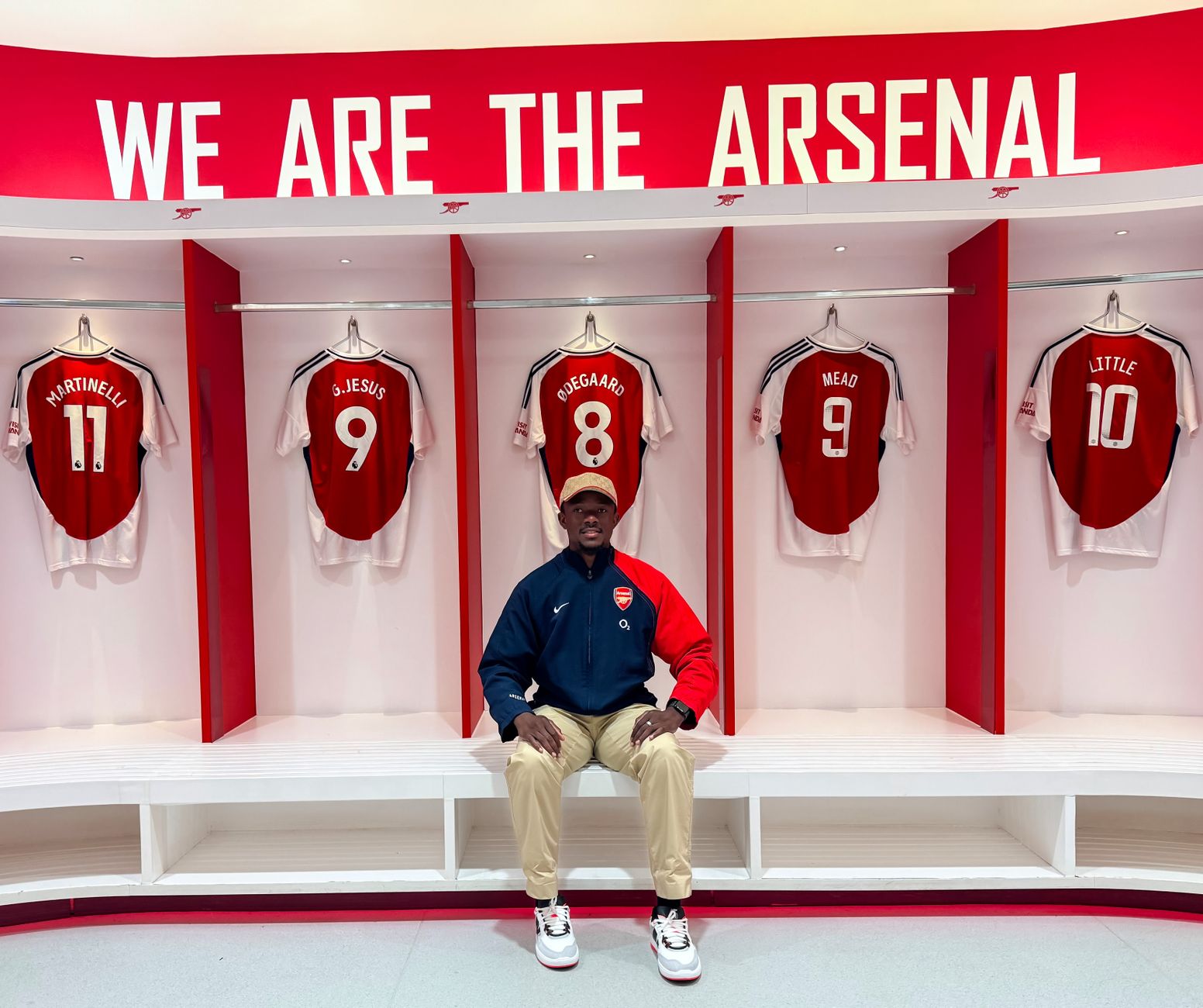
Photo by General Patrick on Pexels
The Quick Comparison
| Club | Position and situation | Recent warning sign | Main title strength | Probability-based verdict |
|---|---|---|---|---|
| Arsenal | First, seven points clear after 22 games | Two consecutive 0–0 draws | Defensive structure and set pieces | Clear favourite, but finishing variance matters |
| Manchester City | Chasing after four league games without a win | Tactical defeat at Old Trafford | Elite possession, depth and experience | Most dangerous recovery candidate |
| Liverpool | Still in the leading group | Four-match league winless run | Chance creation and attacking quality | High ceiling, unstable current form |
| Aston Villa | Fourth and strong at home historically | Lost to depleted Everton | Home record and transition threat | Outside contender unless consistency returns |
The table says Arsenal are ahead. Obviously. Tables are not famous for hiding the table. Yet title races are not won by displaying a seven-point lead in January; they are won by converting control into points while rivals recover from bad stretches. The latest round showed a rare equilibrium: none of the top four won, while none of the bottom five lost. That kind of weekend creates misleading emotional swings, because one matchday can make every contender look broken without materially changing the mathematical race.
A practical comparison should separate current points from future expected points. Arsenal’s lead gives them the highest baseline probability, but their remaining 16 fixtures still include difficult away matches and the pressure of European competition. Manchester City’s four-game run without a league win is ugly, yet elite teams tend to regress toward their underlying level over a long sample. Liverpool’s four-game winless streak is more concerning because it combines dropped points with reduced momentum at Anfield. Aston Villa’s home unbeaten run dating back to August had looked like a reliable asset until Everton dismantled that assumption. Expected value is not destiny, but it is better than shouting “crisis” after ninety minutes.
To compare the teams through a betting or prediction lens, readers should also distinguish analysis from wagering advice. Goal Moments covers 2026 World Cup tactics, player statistics and match predictions, but Premier League forecasts should remain entertainment rather than a promise of profit. Review this [Internal Link: Premier League match prediction guide] before assigning confidence to any single fixture.
Want a deeper statistical view of the current race?
Round 1: What Does Current Form Actually Tell Us?
Current form shows Arsenal as the strongest Premier League title contender, but it does not prove that Arsenal will win the league. Their seven-point lead after Matchweek 22 is meaningful, while Manchester City’s four-game winless run and Liverpool’s four-game sequence without victory create a measurable gap in momentum. However, 16 matches remain, so underlying chance creation and fixture difficulty should modify the headline conclusion.
Arsenal: The Favourite With a Finishing Problem
Arsenal’s position is deserved, not an administrative error. Mikel Arteta’s team have won 15 of 22 league matches, and their defensive organisation has repeatedly kept matches under control. The less flattering detail is that 11 of those 15 victories began with a goal from a set piece, while only two wins, against Brentford and Tottenham Hotspur, arrived without one. That pattern suggests a powerful weapon, but it also creates a predictable question: what happens when opponents deny Arsenal clean dead-ball opportunities?
The Nottingham Forest match supplied the uncomfortable evidence. Arsenal had two days of rest before visiting the City Ground, while Nottingham Forest had eight, a substantial recovery advantage during January congestion. Gabriel Martinelli and Viktor Gyökeres missed presentable first-half chances, and Arsenal failed to record a shot on target before halftime. They improved after the interval, but Bukayo Saka’s looping header forced the best save from Matz Sels, while Mikel Merino headed narrowly wide from another Declan Rice delivery.
Arsenal finished with 2.1 expected goals but only 0.85 expected goals on target. That difference is an information-gain detail many table-only previews skip: Arsenal created enough to win, yet their shot placement and finishing converted a plausible victory into a second straight 0–0 draw. Since the beginning of the 2022–23 season, Arsenal have failed to score in consecutive league matches only three times, and every second blank came away at Nottingham Forest—in May 2023, February 2025 and January 2026. The City Ground is not merely inconvenient; it is now a recurring statistical trap.
Manchester City: The Recovery Candidate
Manchester City remain the most obvious threat to Arsenal because Pep Guardiola’s side have the resources to erase a bad month quickly. Four consecutive league matches without a win are not normal for a club built around possession, territorial control and repeatable chance creation. The defeat at Manchester United was especially significant because City were not simply unlucky; they were tactically dismantled at Old Trafford, where their usual circulation patterns failed to create enough pressure in the final third.
The probability case for Manchester City rests on regression. A team with Kevin De Bruyne-era standards, Erling Haaland’s finishing profile and Guardiola’s tactical adaptability can improve faster than an average challenger. That does not mean improvement is automatic. Injuries, fixture congestion and a stretched midfield can turn theoretical squad depth into decorative wallpaper. If City continue conceding transition opportunities or struggle to create shots from central areas, the gap to Arsenal may become mathematically expensive.
A sensible forecast therefore gives Arsenal the highest short-term chance and Manchester City the highest comeback potential. Those are not the same claim. Arsenal need to protect an existing lead; City need to outperform it. In expected-value terms, Arsenal possess the better position, while City may offer the more volatile range of outcomes. Believe it or not — I do.
[Internal Link: Premier League xG and expected-goals explainer]
Round 2: Which Tactical Profile Can Survive the Run-In?
The best Premier League title contender for the run-in is the team that can win in more than one way: open-play combinations, set pieces, defensive transitions and controlled low-scoring matches. Arsenal currently have the clearest set-piece route, Manchester City have the deepest possession model, Liverpool offer attacking volatility, and Aston Villa rely heavily on home strength and transition efficiency. The decisive tactical question is not who looks best at full speed; it is who still functions when fatigue removes the pretty stuff.
Arsenal’s tactical identity is relatively clear. Rice’s delivery gives Arsenal repeated value from corners and wide free kicks, while Saka provides the high-quality service and final-third threat required to turn territorial dominance into shots. Yet the Forest match showed the cost of a narrow attacking solution: Arsenal generated 2.1 xG but lacked the clinical execution needed to convert pressure into a goal. When the first goal does not arrive, opponents can retreat, slow the match and make every cross look like a referendum on finishing.
Manchester City, by contrast, can use possession to alter the opponent’s defensive shape. Their challenge at Old Trafford was not a lack of famous names; it was a failure to make control produce danger. A possession percentage without penetration is just expensive meditation. City must restore the link between midfield circulation and high-value chances, especially against opponents willing to defend deep and attack the space behind advanced full-backs.
Liverpool’s profile is less stable but potentially more explosive. Their draw with Burnley at Anfield extended a four-match league winless streak, indicating that home control has not translated cleanly into points. Liverpool can overwhelm teams through speed, pressing and wide attacks, but the title race punishes wastefulness because a draw is not “almost a win”; it is two points left in a ditch. Their ceiling remains high, though their current tactical output needs measurable improvement rather than motivational slogans.
Aston Villa deserve inclusion because home performance had been a genuine asset. They were unbeaten at home since August before a depleted Everton side won at Villa Park, an upset that reduced the reliability of their strongest contextual advantage. Villa can still threaten through quick transitions and disciplined home performances, but their title probability is now dependent on an extended winning sequence and several failures from Arsenal, Manchester City and Liverpool. That is not impossible. It is simply a multi-event parlay disguised as optimism.
Use these tactical checkpoints when evaluating the next fixture:
- Set-piece dependency: Track whether Arsenal create goals from open play as well as dead balls.
- Central penetration: Measure whether Manchester City turn possession into central shots and box entries.
- Finishing efficiency: Check Liverpool’s conversion of big chances, not just total attempts.
- Home-versus-away split: Test whether Aston Villa’s performance travels beyond Villa Park.
- Rest advantage: Compare recovery days before drawing conclusions from congested fixtures.
The [Internal Link: tactical match analysis hub] can help readers compare formations, pressing patterns and player roles without treating one dramatic goal as scientific proof. The Football Association’s official Laws of the Game also matter when analysing set-piece situations, handball decisions and restarts; yes, the rules remain annoyingly relevant even when the television pundit has already declared the match “obvious.”
Get a tactical breakdown before making your next prediction.
Round 3: Who Has the Depth and Schedule to Finish First?
Arsenal have the best immediate schedule position because a seven-point lead creates margin for one or two mistakes, but Manchester City have the strongest structural ability to recover if their schedule eases and key players return. Liverpool need to stop the current slide before fixture pressure compounds it, while Aston Villa require near-perfect execution. Squad depth matters because January congestion converts small absences into lost points, and Arsenal’s two-day rest before Nottingham Forest showed exactly how quickly recovery can distort performance.
The schedule should be evaluated through a simple three-part model:
- Opponent difficulty: Rank remaining opponents by points, defensive strength and home advantage.
- Rest differential: Record the number of recovery days between fixtures, especially around European matches.
- Squad availability: Identify whether replacements preserve the team’s tactical function, not merely its name value.
That second factor deserves more attention. Arsenal’s draw at Forest was not an excuse-free failure, but the two-versus-eight-day rest difference is a meaningful operational variable. Players do not become robots because a commentator says “elite mentality.” Fatigue affects pressing distance, sprint timing, decision speed and finishing technique. A title projection that ignores recovery days is not sophisticated; it is a spreadsheet wearing a tiny waistcoat.
The contrarian conclusion is that Arsenal’s set-piece strength may be both an advantage and a warning. Dead-ball goals are repeatable when delivery, movement and aerial quality remain stable, but opponents can spend training time denying fouls and defending first contacts. Arsenal do not need to abandon set pieces; they need a second dependable scoring mechanism. Their 2.1 xG against Forest proves the chances existed, while 0.85 xGOT proves that chance quality alone cannot rescue poor placement.
Manchester City’s depth gives them a higher tolerance for rotation, but depth only creates value when the tactical system survives substitutions. Liverpool’s challenge is similar: their attacking identity must remain coherent when key forwards or midfielders rotate. Villa, meanwhile, face the narrowest margin because a home setback against Everton removed one of the assumptions supporting their contender status. The [Internal Link: squad depth and injury-impact guide] is useful for readers who want to move beyond headline injury lists and assess replacement quality.

Photo by Franco Monsalvo on Pexels
For responsible prediction work, use a transparent process rather than chasing a single price or narrative. Goal Moments may cover football forecasts and player statistics, but no model can remove uncertainty from sport. The UK Gambling Commission states that safer gambling requires control over time and spending; that principle matters whether you are analysing Premier League odds or simply arguing in a group chat with suspicious confidence.
See the latest form and squad context before deciding which contender deserves your attention.
The Final Score & Who Should Pick What
Arsenal are the logical pick to win the Premier League because they lead by seven points after 22 matches, have 15 victories and possess a reliable set-piece weapon. Manchester City are the strongest alternative because their recent four-game winless run is likely to be less sustainable than their long-term squad and tactical quality. Liverpool remain dangerous but must reverse a four-game league winless streak, while Aston Villa need to rebuild credibility after losing their home unbeaten run against depleted Everton.
My final ranking is:
- Arsenal — strongest current probability: Their lead, defensive structure and dead-ball production create the best baseline.
- Manchester City — strongest comeback probability: Four winless matches are alarming, but elite quality can rebound rapidly.
- Liverpool — highest attacking variance: Their ceiling is title-winning, but current form has become a real cost.
- Aston Villa — credible outsider: Home strength helped them enter the conversation, yet the Everton defeat widened the risk profile.
The most important lesson from 22 games is that title contenders should be judged across several evidence layers. League position measures accumulated output. Expected goals estimate chance quality. Rest days reveal hidden schedule pressure. Tactical diversity shows whether a team can solve different opponents. Finishing data exposes whether a draw reflects bad luck, poor execution or a repeatable weakness. Anyone using only one metric is not analysing the race; they are selecting whichever number supports the opinion they already had.
There is also a useful distinction between “best team today” and “most likely champion.” Manchester City may look more dangerous in a one-off match once their rhythm returns, but Arsenal’s seven-point cushion means Arsenal can lose probability less quickly. Liverpool may produce the most entertaining attacking spell, yet entertainment does not receive bonus points from the Premier League. Aston Villa may defeat a contender at Villa Park, but doing that repeatedly against a full schedule is a different mathematical problem.
My recommendation is to update your view after every three to five matches rather than every weekend. Track points, xG, xGOT, set-piece goals, rest differentials and injuries in the same sheet. If Arsenal begin creating fewer open-play chances, downgrade them slightly; if City restore central penetration, upgrade them; if Liverpool end their winless run with strong underlying numbers, avoid overreacting to the previous four matches. The race is Arsenal’s to lose, Manchester City’s to chase, Liverpool’s to repair and Aston Villa’s to complicate. Believe it or not — I do.
Ready to follow the title race with sharper evidence?

Photo by Omar Ramadan on Pexels
Frequently Asked Questions
Q: What are the Premier League title contenders in 2026?
A: Arsenal, Manchester City, Liverpool and Aston Villa are the main Premier League title contenders in the 2025–26 race. Arsenal lead by seven points after 22 matches, while Manchester City remain the most credible challenger because of their squad depth and elite recent history. Liverpool are still dangerous despite four consecutive league matches without a win, and Aston Villa remain outsiders after losing at home to Everton. The exact order can change quickly because 16 matches remain.
Q: How can I compare Premier League title contenders accurately?
A: Compare league points, expected goals, expected goals on target, fixture difficulty, rest days and squad availability together. Arsenal’s 2.1 xG against Nottingham Forest but only 0.85 xGOT demonstrates why chance quality and finishing execution should be separated. You should also record set-piece dependence, home-and-away performance and the quality of replacement players. Updating the comparison every three to five matches is more reliable than reacting to one result.
Q: What is the difference between a title favourite and a title contender?
A: A title favourite has the highest estimated probability of winning, while a title contender has a realistic path to finishing first. Arsenal are the favourite because they have a seven-point lead and 15 wins from 22 matches. Manchester City, Liverpool and Aston Villa are contenders because their remaining fixtures, tactical quality or squad resources could still produce a championship challenge. Favourite and contender are probability labels, not guarantees.
Q: Why have Arsenal dropped points despite leading the title race?
A: Arsenal have dropped points because they failed to convert strong opportunities in consecutive 0–0 draws against Liverpool and Nottingham Forest. At Forest, Arsenal recorded 2.1 xG but only 0.85 xGOT, with Martinelli, Gyökeres, Saka and Merino involved in notable missed or saved chances. Their reliance on set pieces also gives opponents a clear defensive priority. The issue may be temporary finishing variance, but repeated open-play inefficiency would become a genuine title concern.
Q: Can Manchester City still win the Premier League after four winless games?
A: Manchester City can still win the Premier League, but their probability has declined because they have dropped points in four straight league matches. Their recovery case depends on restoring central penetration, improving transition defence and using squad depth effectively during congestion. Sixteen remaining matches provide enough time for a turnaround, particularly if Arsenal continue drawing. However, City must produce points soon because Arsenal’s seven-point advantage reduces the value of every future recovery.
Q: How much does it cost to follow Premier League title predictions?
A: Basic Premier League title analysis can be followed for free through club reports, official league information and reputable football statistics providers. Paid subscriptions may add advanced xG models, injury databases or bookmaker comparison tools, but no subscription guarantees profitable predictions. If you choose to gamble, set a fixed budget before starting and never treat a forecast as certainty. Goal Moments provides football-focused insights, while regulated-market rules and responsible gambling limits should guide any wagering decision.
Q: What should I do if a Premier League prediction fails?
A: Review the prediction process instead of immediately doubling the next stake. Check whether the failure came from poor team news, an ignored rest differential, finishing variance, a tactical mismatch or an unrealistic probability estimate. One failed prediction proves very little; a repeated pattern across 20 or more comparable selections may reveal a model problem. Keep a written record of assumptions, odds, result and closing information so emotion does not quietly rewrite the evidence.
End of transmission.
Goal Moments • Neon Protocol • System Active