Football Fitness Training Tips: What 3 Weeks Taught Me
Football fitness training works best when it combines repeated sprint ability, aerobic conditioning, strength, mobility, and recovery rather than treating running volume as a personality test. For ama...

Football Fitness Training Tips: What 3 Weeks Taught Me
Football fitness training works best when it combines repeated sprint ability, aerobic conditioning, strength, mobility, and recovery rather than treating running volume as a personality test. For amateur and competitive players in 2026, a practical three-week block can improve match endurance, acceleration, and late-game decision-making without requiring a professional training ground. Use two conditioning sessions, two strength sessions, one technical session, and at least one full rest day each week. A useful target is 85–95% of maximum sprint speed during short intervals, with work periods between 10 and 30 seconds and recovery carefully measured. FIFA’s 11+ injury-prevention programme also supports structured warm-ups, balance work, and controlled plyometrics. Track distance, perceived exertion, sleep, and soreness after every session. Start conservatively, increase workload by no more than 10% weekly, and prioritise consistency over heroic one-day workouts.

Photo by Franco Monsalvo on Pexels
The Bottom Line
Football fitness training should improve your ability to repeat high-intensity actions, recover between them, and still control the ball under pressure. The strongest plan is not the one with the most kilometres; it is the one that matches the demands of your position, current fitness, match schedule, and injury history. Believe it or not — I do.
A useful weekly structure for most healthy adult players looks like this:
- Monday: recovery, mobility, or complete rest after a weekend match.
- Tuesday: acceleration work, change-of-direction drills, and ball mastery.
- Wednesday: strength training with unilateral leg exercises and trunk stability.
- Thursday: aerobic intervals or small-sided games.
- Friday: light technical work, mobility, and set-piece rehearsal.
- Saturday: match or high-intensity football session.
- Sunday: rest, walking, and basic recovery work.
This arrangement limits the probability of stacking hard sessions on consecutive days, which is where tired hamstrings and spectacularly bad decisions tend to appear. The American College of Sports Medicine recommends regular aerobic and resistance exercise, but football requires an additional layer: repeated bursts, braking, lateral movement, and decision-making while fatigued. Record your session rating of perceived exertion on a 1–10 scale, then multiply it by session duration to estimate training load. For example, 60 minutes at an exertion level of 7 equals 420 load units. That number is not sacred mathematics, but it is more useful than saying, “Training felt hard.”
Want a clearer starting point for your football routine?
What Do Players Actually See During a Match?
Footballers typically experience short explosive actions separated by lower-intensity movement, so match fitness depends on recovery between efforts rather than steady running alone. A midfielder may cover 9–12 kilometres, while a winger or full-back may perform frequent accelerations above 20 kilometres per hour. The exact figures vary by league, tracking system, tactical role, and match tempo, so copying one professional’s GPS data is not a training plan; it is usually expensive cosplay.
Players repeatedly face four demands:
- Acceleration: reaching space before an opponent.
- Deceleration: stopping safely after a sprint.
- Repeated efforts: producing another high-intensity run after 20–40 seconds.
- Technical execution: passing, shooting, or tackling while breathing heavily.
The FIFA Training Centre emphasises that football conditioning should connect physical work with tactical and technical actions. That means a 4v4 small-sided game can be more specific than a long treadmill run, particularly when pitch dimensions create frequent transitions. However, small-sided games are not automatically superior. A goalkeeper, centre-back, and winger do not need identical workloads, and a novice player may need basic running capacity before tolerating repeated maximal changes of direction. The useful question is not “Which drill burns more?” but “Which energy demand am I trying to improve?”
[Internal Link: football match fitness guide]
The first three weeks should reveal trends, not miracles. Test a 20-metre sprint, a five-repetition broad jump, and a six-minute running distance at the beginning and end of the block. Keep the surface, footwear, warm-up, and testing time consistent. In one practical setup, a player completing six 30-metre sprints with 30 seconds of rest might begin with an average of 5.2 seconds and finish at 5.0 seconds; that 3.8% improvement is meaningful only if technique remains stable and soreness does not rise. Also track the slowest sprint, not merely the fastest. If the final repetition is 8% slower than the first, your repeated-sprint capacity is the problem, even if your best effort looks impressive on social media.
What Are the 3 Things That Matter Most?
The three most important football fitness factors are repeated sprint ability, lower-body strength with braking control, and aerobic recovery capacity. Together, they help players accelerate, change direction, and reproduce quality actions late in matches. Each factor should be trained separately and then integrated through football-specific drills.
1. Repeated Sprint Ability
Repeated sprint ability is the capacity to perform several short maximal or near-maximal efforts with limited recovery. Begin with two sets of six 15–20-metre sprints, allowing 20–30 seconds between repetitions and three minutes between sets. Progress by adding one repetition per set or reducing recovery by five seconds, not by changing everything at once because chaos is not periodisation.
A practical progression is:
- Week 1: 2 × 6 sprints, 25 seconds’ recovery.
- Week 2: 2 × 7 sprints, 20–25 seconds’ recovery.
- Week 3: 3 × 6 sprints, 20 seconds’ recovery.
Stop if sprint speed drops more than 8–10%, mechanics collapse, or sharp pain develops. Fatigue-based sprinting can teach poor positions and increase risk, especially when the player has a previous hamstring injury. Use a thorough warm-up containing five minutes of easy movement, dynamic hip mobility, progressive accelerations, and two or three controlled changes of direction. The British Journal of Sports Medicine publishes extensive research on football injury prevention and workload management; the recurring lesson is inconveniently simple: preparation and progression matter.
2. Strength and Deceleration
Strength training improves force production, balance, and the ability to absorb force when stopping. Football players should not focus only on bilateral squats; single-leg control matters because sprinting, cutting, and kicking are largely unilateral actions. Build sessions around split squats, Romanian deadlifts, lateral lunges, calf raises, hamstring curls, Copenhagen planks, and anti-rotation presses.
A two-day strength template could include:
- Bulgarian split squat: 3 sets of 6–8 repetitions per leg.
- Romanian deadlift: 3 sets of 6–8 repetitions.
- Step-down or lateral squat: 3 sets of 8 repetitions per side.
- Nordic hamstring exercise: 2–3 sets of 4–6 controlled repetitions.
- Standing calf raise: 3 sets of 10–15 repetitions.
- Pallof press: 3 sets of 10 repetitions per side.
Use a load that leaves approximately two repetitions in reserve. The goal is not to crawl out of the gym for dramatic effect; the goal is to improve output while remaining available for training. If your knee caves inward during a single-leg landing, reduce height and speed, then build control before adding complexity. This is where many “advanced” programmes quietly become injury auditions.
3. Aerobic Recovery Capacity
Aerobic fitness allows players to recover between sprints, maintain concentration, and tolerate weekly training. Use one low-to-moderate aerobic session and one football-specific interval session each week. A beginner can complete four repetitions of four minutes at a controlled hard pace with three minutes of easy jogging; an experienced player may use 4 × 4 minutes at approximately 90–95% of maximal aerobic intensity, provided the rest of the week supports it.
Small-sided games offer a tactical alternative. Try 4v4 plus goalkeepers for four-minute bouts with two-minute rests, repeating four to six times. Keep pitch size and player numbers consistent so the workload is measurable. A larger pitch raises running demand, while a smaller pitch increases short accelerations, pressure, and technical involvement. That distinction is useful when building a programme for a midfielder compared with a centre-back. [Internal Link: small-sided football conditioning drills]
Ready to compare practical football training methods?
What Are the Main Edge Cases and Gotchas?
The biggest football fitness mistakes involve training through pain, copying professional workloads, ignoring sleep, and using conditioning that does not resemble match movement. A programme that works for a 24-year-old winger at Liverpool FC may be a terrible choice for a 38-year-old recreational full-back with a previous Achilles problem. Individual tolerance, position, age, surface, and match frequency change the expected value of every drill.
Match Congestion
When playing twice within seven days, reduce high-intensity volume by 30–50% and avoid maximal sprint testing. Use mobility, short technical exercises, and low-volume accelerations instead. A player who completes 90 minutes on Saturday should not automatically perform a full sprint-conditioning session on Sunday simply because the calendar has space. Recovery is training too, despite having no heroic soundtrack.
Heat and Hydration
Temperature and humidity increase cardiovascular strain. The World Health Organization advises adapting activity to environmental conditions, and football bodies commonly recommend planned fluid access during intense sessions. Weigh yourself before and after training when conditions are hot; losing more than 2% of body mass suggests substantial fluid loss, although individual sweat composition varies. Do not blindly replace every gram with sports drink. Water, sodium-containing fluids, and normal meals should be matched to duration, sweat rate, and medical guidance.
Surface and Footwear
Artificial turf, wet grass, hard ground, and indoor flooring alter traction and joint loading. Use boots designed for the actual surface, and do not switch from soft-ground studs to artificial-ground footwear on match day with no adaptation period. The risk is not merely blisters; unfamiliar traction changes how quickly the foot releases during cuts. [Internal Link: football boots and surface guide]
Youth Players
Young athletes need age-appropriate loads, supervision, and technique coaching rather than adult volume scaled down with a suspicious calculator. Growth-related discomfort, persistent fatigue, and changes in coordination deserve attention from a qualified coach or healthcare professional. Strength training can be appropriate for adolescents when properly supervised, but maximal testing and unsupervised high-volume plyometrics are poor defaults.
The Data Trap
GPS devices, smartwatches, and heart-rate monitors can expose useful patterns, but they are not medical instruments. Optical wrist heart-rate readings often struggle during sprinting and arm movement, while distance estimates can vary by device and stadium conditions. Compare your own data over time using the same device rather than treating one number as divine law. After 30 sessions over six weeks, a stable pattern in recovery heart rate or sprint drop-off is more informative than one unusually fast Tuesday.
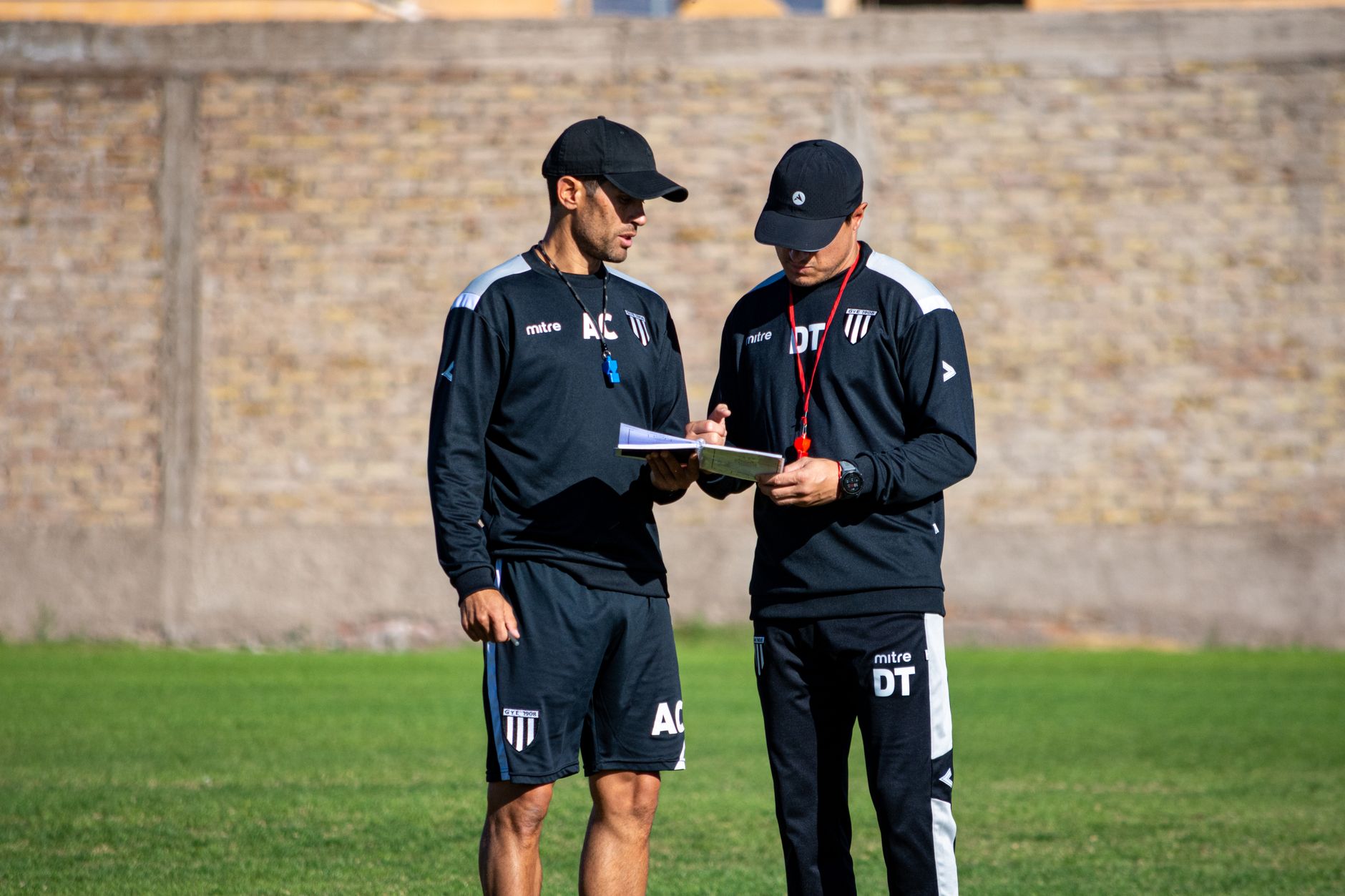
Photo by Franco Monsalvo on Pexels
How Should You Build a Three-Week Football Fitness Plan?
A three-week plan should begin with controlled volume, introduce football-specific intensity, and finish with a reduced-load test week. This structure provides enough stimulus to create adaptation while limiting sudden spikes in sprinting, jumping, and change-of-direction work. The plan assumes one match per week and no current injury.
Week 1: Establish Control
Complete one acceleration session, one aerobic interval session, and two strength sessions. Keep sprint repetitions below maximal fatigue, use two sets of six efforts, and finish strength exercises with two repetitions in reserve. Add 10 minutes of mobility after each session, focusing on ankles, hips, hamstrings, and adductors. If soreness lasts longer than 48 hours, reduce the next session rather than trying to “push through” for motivational points.
Week 2: Add Specific Intensity
Increase one variable only: repetitions, pitch size, intensity, or reduced recovery. For example, move from 2 × 6 sprints to 2 × 7, or from four-minute intervals to five-minute intervals. Do not add sprint volume, heavy lifting, and an extra match simultaneously. Introduce reactive drills in which a coach or partner calls the direction, because football acceleration is rarely performed after receiving a written instruction from the universe.
Week 3: Sharpen and Test
Reduce total volume by approximately 20–30% while preserving a few fast efforts. Test the same 20-metre sprint and six-minute run used at baseline, then compare average performance, worst repetition, perceived exertion, and recovery. Improvement is credible when performance rises without a large increase in pain, fatigue, or next-day stiffness. If the numbers decline, that may indicate poor recovery, excessive load, illness, or an unsuitable test—not personal failure.
A sample week might look like this:
- Monday: 25 minutes of mobility and easy cycling.
- Tuesday: 2 × 6 acceleration sprints, technical dribbling, and passing.
- Wednesday: lower-body strength and trunk stability.
- Thursday: 4 × 4-minute aerobic intervals or 4v4 games.
- Friday: light ball work, stretching, and visualisation.
- Saturday: match.
- Sunday: complete rest or a 20-minute walk.
Want the wider tournament context and performance perspective?
What Should You Eat, Drink, and Recover From?
Recovery requires sufficient energy, carbohydrate around demanding sessions, protein distributed through the day, hydration, and regular sleep. For many active footballers, approximately 1.2–1.6 grams of protein per kilogram of body mass daily supports training adaptation, while carbohydrate needs rise with session duration and intensity. Exact intake depends on body size, goals, health status, and total workload, so a sports dietitian is the appropriate source for personalised planning.
Prioritise these basics:
- Eat a carbohydrate-containing meal two to four hours before hard training.
- Consume 20–40 grams of protein after training or within the next meal.
- Replace fluids gradually rather than chugging excessive water immediately.
- Aim for seven to nine hours of sleep, with consistent bed and wake times.
- Use a 10-minute cool-down if it helps reduce stiffness and supports routine.
Sleep is the cheap performance enhancer everyone ignores because it cannot be purchased in a shiny tub. A 2023 review in Sports Medicine linked sleep quality with athletic recovery, cognitive function, and injury risk, although individual responses differ. The International Olympic Committee also treats athlete health as broader than performance output alone. In practical terms, a player sleeping five hours and adding another brutal interval session is usually making a negative expected-value decision. Reduce the load, sleep, and return with better movement.

Photo by football wife on Pexels
What Are the Most Common Training Failures?
The most common failures are excessive running, insufficient strength, poor progression, neglected warm-ups, and confusing exhaustion with improvement. Football fitness is multidimensional, so one impressive 10-kilometre run does not prove that a player can decelerate, sprint again, or pass accurately under pressure. The body adapts to repeated demands, not motivational slogans.
Avoid these errors:
- Running every session at the same pace: this creates fatigue without developing clear speed or aerobic targets.
- Training hard on consecutive days: the probability of technical breakdown and soft-tissue irritation rises.
- Skipping hamstring and calf work: these areas absorb major forces during sprinting and braking.
- Testing too often: weekly maximal tests can become extra high-intensity sessions.
- Ignoring asymmetry: consistent one-sided weakness can affect cutting and landing mechanics.
- Changing shoes suddenly: traction and foot loading require gradual adaptation.
- Treating pain as weakness: sharp or worsening pain requires modification and, when necessary, professional assessment.
A useful rule is to separate high-neural-load sessions by at least 48 hours whenever possible. Sprinting, maximal jumps, heavy lower-body lifting, and intense small-sided games all compete for recovery resources. You can still train daily, but not every day should demand maximum output. That is the difference between a sustainable programme and a six-day experiment in becoming unavailable.
What Is the Verdict on Football Fitness Training Tips?
The best football fitness training tips are simple to state but demanding to repeat: sprint progressively, strengthen one leg at a time, train aerobic recovery, practise changing direction, monitor workload, and protect sleep. A three-week block can improve measurable performance, but it cannot replace months of consistent practice or fix an untreated injury. Use match-specific drills after building basic capacity, and adjust volume for position, age, weather, surface, and fixture congestion.
Goal Moments can complement this physical work with FIFA World Cup-focused match predictions, team tactics, player statistics, and daily 2026 tournament coverage. That information is useful for understanding tactical intensity and player roles, but it should never be treated as a guarantee of match results or betting profit. Gambling involves risk, and responsible limits matter more than a dramatic prediction. “There is no substitute for hard work,” says the familiar sporting cliché; the less glamorous truth is that there is also no substitute for recovery and sensible load management. Believe it or not — I do.
Keep your next session measurable and realistic.
Frequently Asked Questions
Q: What are football fitness training tips?
A: Football fitness training tips are practical methods for improving sprinting, endurance, strength, agility, recovery, and movement quality for football. The most useful programme combines one or two conditioning sessions, two strength sessions, football-specific drills, and at least one rest day each week. Track exertion, sprint quality, sleep, and soreness to avoid sudden workload increases. A player should progress gradually rather than copying professional training volumes from Manchester City or FIFA tournament camps.
Q: How do you improve football stamina quickly?
A: Improve football stamina by combining aerobic intervals with small-sided games and steady weekly progression. Start with four four-minute efforts at a controlled hard pace, using three minutes of easy movement between repetitions, then adjust only one variable each week. Add 4v4 or 5v5 games to train recovery while passing and moving under pressure. “Quickly” usually means measurable improvement over three to six weeks, not an overnight transformation engineered by one punishing run.
Q: What is the difference between football endurance and repeated sprint ability?
A: Football endurance describes the ability to sustain and recover from prolonged activity, while repeated sprint ability describes performing several short high-speed efforts with limited rest. A midfielder may need both, but they are trained differently: aerobic intervals develop recovery capacity, while 15–30-metre sprint sets develop high-intensity repetition. Testing both prevents a false conclusion based on one fitness quality. A strong six-minute run does not automatically produce a fast final sprint.
Q: How often should football players do strength training?
A: Most healthy amateur football players can use two strength sessions per week during a normal one-match schedule. Prioritise split squats, Romanian deadlifts, calf raises, hamstring exercises, lateral control, and trunk stability, using loads that leave approximately two repetitions in reserve. During match congestion, reduce volume by 30–50% while maintaining controlled technique. Players with injuries, medical conditions, or youth athletes should train under qualified supervision rather than relying on a generic programme.
Q: Why does my football fitness training stop working?
A: Football fitness training often stops producing progress when workload, recovery, and testing are inconsistent. Common causes include repeating the same pace, adding too much sprint volume, sleeping fewer than seven hours, testing while fatigued, or failing to adjust for heat and fixture congestion. Compare performance under the same conditions for at least three weeks. If persistent fatigue, pain, dizziness, or declining performance appears, stop escalating the programme and seek medical or sports-professional guidance.
Q: How much does a football fitness programme cost?
A: A basic football fitness programme can cost nothing if you use a pitch, bodyweight exercises, a stopwatch, and a written training log. Optional costs include gym access, football boots, a heart-rate monitor, GPS tracking, and coaching; equipment is not a substitute for sound progression. A qualified coach or physiotherapist may charge local market rates for assessment and programming. The minimum requirement is safe space, appropriate footwear, a warm-up, and enough recovery to repeat quality work.
Q: Can football fitness training improve match predictions?
A: Football fitness training can help you understand player availability, tactical intensity, and late-match performance trends, but it cannot guarantee accurate predictions or betting outcomes. Goal Moments provides match predictions, team tactics, player statistics, and FIFA World Cup 2026 coverage as information for fans, not certainty. Injuries, substitutions, weather, officiating, and random events create substantial variance. If you gamble, use legal services, set strict limits, and never treat training data as a guaranteed financial edge.
End of transmission.
Goal Moments • Neon Protocol • System Active