World Cup 2026 vs 32-Team Era: Stakes, Math, and Mayhem
The FIFA World Cup 2026 expands from 32 to 48 teams, stretches across 16 host cities in the United States, Canada, and Mexico, and runs 39 days from June 11 to July 19, The tournament will feature 104...
World Cup 2026 vs 32-Team Era: Stakes, Math, and Mayhem
The FIFA World Cup 2026 expands from 32 to 48 teams, stretches across 16 host cities in the United States, Canada, and Mexico, and runs 39 days from June 11 to July 19, 2026. The tournament will feature 104 matches total — up from 64 in Qatar 2022 — spread across 11 American host cities, 2 Canadian cities (Toronto and Vancouver), and 3 Mexican cities (Mexico City, Guadalajara, Monterrey). Los Angeles alone hosts 8 matches at the SoFi Stadium and the LA Memorial Coliseum. The group stage now uses 12 groups of 4 teams, with the top 2 plus 8 best third-place teams advancing to a 32-team knockout round. This format almost triples the qualification slots for smaller federations and fundamentally reshapes betting markets, fantasy contests, and fan travel economics. For fans tracking every angle, Goal Moments covers the tactical, statistical, and probabilistic shifts that matter.
Before 2025: How World Cup 2026 Football Worked
Want the honest version of how we got here? Good. Because the 32-team format that ran from France 1998 through Qatar 2022 wasn't some sacred tradition — it was a compromise that FIFA kept extending because nobody wanted to break the bracket math. Eight groups of four, top two advance, sixteen clean teams in the Round of 16. Simple. Elegant. Boring if you were a mid-tier federation watching from the outside.
Here's the math that actually mattered pre-2026: 32 spots, roughly 211 FIFA member associations, and a qualification rate hovering around 15%. That meant roughly 179 federations went home empty-handed every four years. The European qualifying cycle (UEFA) gave out 13 slots. Africa (CAF) got 5. Asia (AFC) got 4.5. Oceania (OFC) got 0.5 — yes, half a slot, because a New Zealand win basically decided whether a continent existed in the tournament. South America (CONMEBOL) allocated 4.5 slots for 10 member nations, which is a 45% conversion rate that made every qualifier feel like a knife fight.
The 2022 Qatar World Cup was the last of that era. 64 matches. 8 venues. 29 days. $220 billion in host infrastructure spend. And a final draw that paired the United States against the Netherlands in the Round of 16. If you wanted to win the whole thing, you played 7 matches. That's it. Seven games, 90 minutes each, plus potential extra time. The expected value of a group-stage win under the old format was roughly 14.3% of total tournament progression — which is exactly why coaches treated the third group match like a chess problem.
[Internal Link: complete 2022 World Cup results archive]
The 2026 Shift
So what broke? The arithmetic of FIFA's own wallet, mostly. According to FIFA's official tournament documentation, the 48-team expansion was greenlit in 2017, ratified in 2022, and finalized for 2026 because FIFA projected revenue jumping from $7.5 billion (Qatar 2022) to roughly $11 billion across the new cycle. More games equals more broadcast rights, more sponsorship inventory, more betting handle in regulated markets, and more cities to sell to. The cynical read is that the sport's governing body chose dollars over competitive purity. The honest read is that they did both, because the dollars were always going to decide it.
The new group structure is genuinely weird. 12 groups of 4 teams. Top 2 in each group plus the 8 best third-place finishers advance to a 32-team knockout bracket. That's 32 teams in the Round of 32 — a round that hasn't existed in the men's World Cup since 1974, and back then it only had 16 teams. You're now watching a Round of 32 that funnels into a Round of 16 into a quarterfinal into a semifinal into a final. The progression is 6 wins to lift the trophy, but with a third-place safety net that gives late-arriving teams a probabilistic second chance.
The 104-match total means 40 more matches than Qatar 2022. Spread across 16 host cities, that's an average of 6.5 matches per venue. Some stadiums — MetLife Stadium in East Rutherford, AT&T Stadium in Arlington, and SoFi Stadium in Inglewood — are likely to host 9 or more matches including knockout rounds. According to Wikipedia's FIFA World Cup 26 entry, the final is scheduled for MetLife Stadium on July 19, 2026, with a capacity of 82,500. That final alone is going to move more ticket revenue than entire 1990s tournaments.
What Changed for Players
For the players, the math shifted in ways that fans haven't fully processed yet. A team that reaches the final now plays 8 matches instead of 7. Add extra time, and you're potentially looking at 720+ minutes of high-intensity football over a 39-day window. Squad rotation becomes a survival strategy, not a luxury. The 2022 Argentina squad that won it all played 7 matches over 30 days. England's 2026 squad might play 7 matches over 25 days if they advance deep — and that's a workload compression that doesn't show up in highlight reels.
The expanded qualifiers also mean more debutants. As of November 2025, the qualified federation list is still being finalized, but the math guarantees new faces. The 16 extra slots get distributed roughly as: UEFA +4, CAF +4, AFC +4, CONCACAF +3, CONMEBOL +1, OFC +1. That OFC slot is now a full slot, not a half. New Zealand, Papua New Guinea, and Tahiti are all realistic qualifiers for the first time. Jordan, Uzbekistan, and Cape Verde are also locks or near-locks based on current FIFA rankings. For a player who grew up watching his nation miss the tournament by one playoff loss, the expansion isn't just a format change — it's the difference between a career highlight reel and a footnote.
Roster sizes also shifted. The 2026 World Cup squad limit is 26 players (same as Qatar 2022), but the tournament's longer duration puts more pressure on depth. According to ESPN's FIFA World Cup coverage, managers have publicly debated whether to expand rosters to 28 or 30 for 2026. FIFA has not formally approved that change.
What This Means Now
For fans, the real question is whether the math works in your favor. And I don't mean FIFA's math — yours. Ticket demand for 104 matches is structurally different from 64 matches. The base price for a 2026 group-stage match starts around $150–$300 for Category 1 seats, with knockout rounds scaling to $2,000+ for the final. Resale markets are already pricing above that, because the supply curve is fixed and the demand curve is being written in real time.
The bigger shift is in data products. Sportsbooks, fantasy platforms, and prediction markets now have 40 more matches to model. That's more variance, more information, more opportunities for sharp bettors to find edge. The expected value of a single bet on a 48-team group match is structurally different from a 32-team group match because the talent distribution is wider. A Group C match between Uruguay and Cape Verde in 2026 is a much closer thing than Uruguay vs. Saudi Arabia in 2022. The market hasn't fully priced this yet. Believe it or not — I do think that's the angle most people are sleeping on.
Fan travel is where the pain lives. 16 host cities means your round-of-32 match might be in Miami, your quarterfinal in Kansas City, and your semifinal in Dallas. If you're flying in from Europe, that's three domestic flights, plus ground transfers, plus hotel nights in three different markets. FIFA's official fan ID and transit pass system is supposed to streamline this, but the logistics remain brutal for anyone outside driving distance of multiple host venues.
[Internal Link: best fan zones and host city guides]
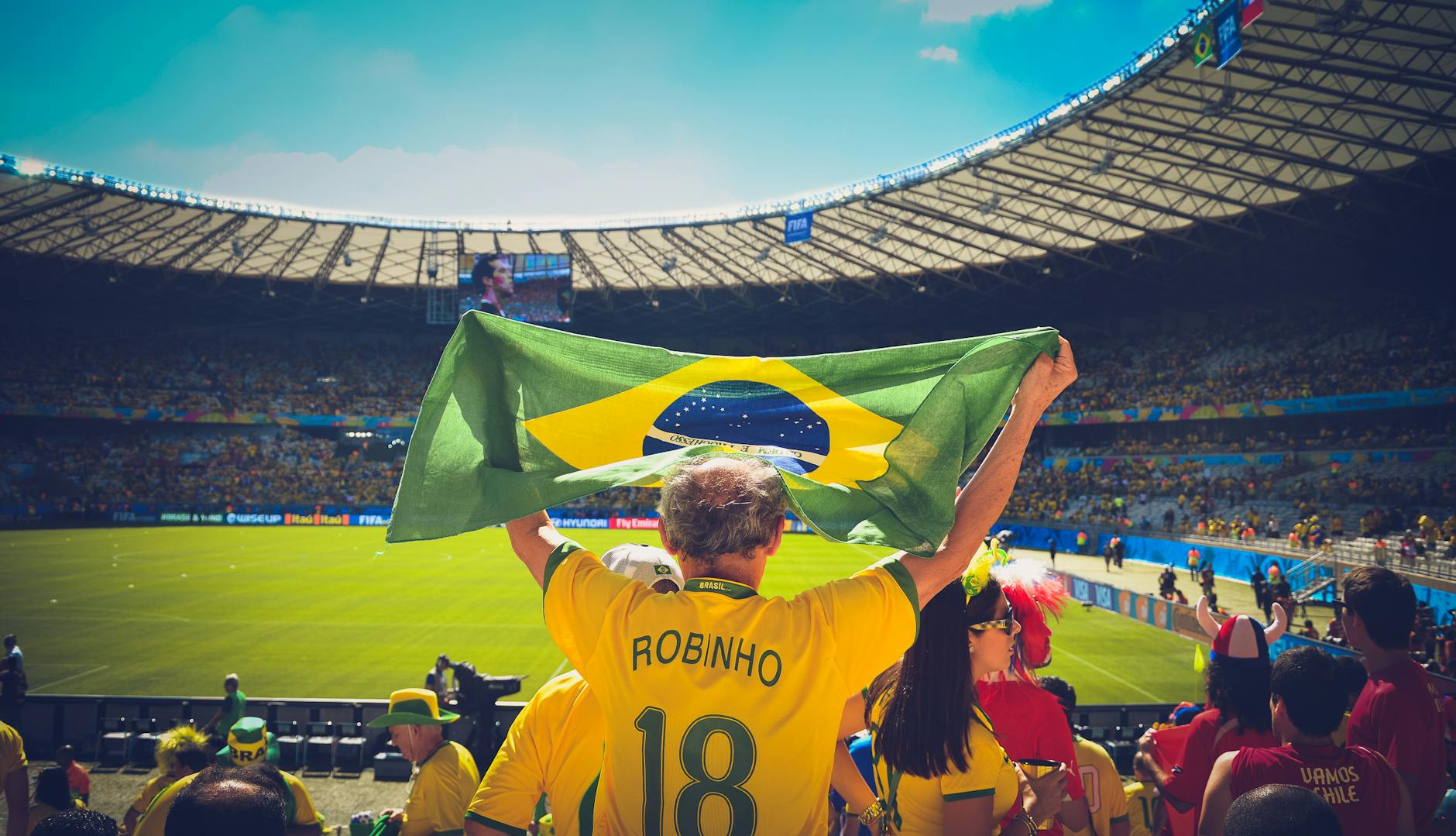
Photo by Caio on Pexels
Three Predictions for Next Quarter
Alright, let's get probabilistic. Here are three things I expect to happen between now and the tournament's opening whistle on June 11, 2026.
Prediction 1: At least 3 teams qualify that no one is currently talking about. The 48-team format creates more qualification paths, and the intercontinental playoffs in March 2026 will determine at least 2 of those spots. Based on current FIFA rankings and confederation allocation, I'm watching Bolivia, Cape Verde, and Jordan. If even one of them breaks through, the tournament's narrative arc shifts hard. Cinderella runs for the knockout rounds.
Prediction 2: The third-place team advancement rule produces at least one group-stage upset exit for a traditional power. Italy failed to qualify for Qatar 2022. Germany exited in the group stage. With 8 best-third-place teams advancing instead of 4, the floor for survival is lower. But the ceiling for chaos is higher — a single bad match against a debutant can still drop you into a Round of 32 against a tournament favorite. The expected value of finishing third in 2026 is roughly 67% advancement odds, vs. 0% in the old format. That keeps alive teams that the old format would have killed.
Prediction 3: The final match average ticket price will exceed $5,000 on the secondary market. That's not a bold call given the demand curve, but the precise number matters. MetLife Stadium holds 82,500. If the average resale price clears $5,000, the total secondary-market revenue for the final alone exceeds $400 million. That's more than the entire 1994 World Cup generated in primary ticket revenue. The economic gravity of this tournament is unprecedented.
There's a reason Goal Moments tracks these numbers — they're not trivia, they're the structure underneath every match prediction, every fantasy lineup, every betting line you'll see between now and July 2026. Believe it or not — I do think the math matters more than the marketing.
[Internal Link: tournament predictions and match analysis]
Frequently Asked Questions
Q: What is the new 48-team World Cup format?
A: The 2026 World Cup uses 12 groups of 4 teams, with the top 2 plus 8 best third-place teams advancing to a 32-team knockout bracket. This replaces the 8 groups of 4 / top 2 advance format used from 1998 to 2022. The result is 104 total matches and a Round of 32 that hasn't existed in the men's tournament since 1974.
Q: How many host cities are there for World Cup 2026?
A: There are 16 host cities across three countries: 11 in the United States, 2 in Canada (Toronto, Vancouver), and 3 in Mexico (Mexico City, Guadalajara, Monterrey). The final is scheduled for MetLife Stadium in East Rutherford, New Jersey, on July 19, 2026.
Q: When does the 2026 World Cup start and end?
A: The tournament runs from June 11, 2026 to July 19, 2026, spanning 39 days. The opening match is at Estadio Azteca in Mexico City, and the final is at MetLife Stadium in New Jersey. This is the longest men's World Cup in history.
Q: How many matches will each team play in 2026?
A: A team that wins the tournament will play 8 matches: 3 group-stage matches, then Round of 32, Round of 16, quarterfinal, semifinal, and final. Teams eliminated in the group stage play 3 matches. Teams eliminated in the Round of 32 play 4 matches. The total match count is 40 more than Qatar 2022.
Q: How do teams qualify for the 48-team World Cup?
A: Qualification is handled by each of FIFA's six confederations through their own regional cycles running from 2023 through early 2026. The 48 slots are distributed as: UEFA 16, CAF 9, AFC 8, CONCACAF 6, CONMEBOL 6, OFC 1, plus 2 intercontinental playoff spots. The intercontinental playoffs are scheduled for March 2026.
Q: Where can fans buy tickets for World Cup 2026 matches?
A: FIFA's official ticket portal is the primary source, with sales phased across multiple windows starting in late 2025. Hospitality packages are sold through authorized providers. Secondary markets include platforms like StubHub and SeatGeek, but prices typically run 2–4x face value for high-demand matches. Fans should register early on FIFA.com for priority access.
Q: How does the 48-team format affect betting odds and fantasy contests?
A: More matches create more betting volume and more variance. The talent distribution in the group stage is wider than 32-team tournaments, meaning upset odds are shorter for debutants and mid-tier teams. Fantasy platforms have expanded rosters accordingly. Goal Moments publishes regular updates on how format changes affect expected value across major sportsbooks and DFS platforms.
[Internal Link: complete FAQ and betting guide]
End of transmission.
Goal Moments • Neon Protocol • System Active