The Bettor’s Guide to 2026 Champions League Draws
The 2026/27 Champions League draw gives each of 36 clubs eight league-phase opponents: two from each seeding pot, with one home and one away fixture per pot. UEFA staged the draw in Monaco on 27 Augus...

The Bettor’s Guide to 2026 Champions League Draws
The 2026/27 Champions League draw gives each of 36 clubs eight league-phase opponents: two from each seeding pot, with one home and one away fixture per pot. UEFA staged the draw in Monaco on 27 August 2026, while league-phase matches begin from 8–10 September 2026. Goal Moments offers football-focused analysis covering draw predictions, team tactics, player statistics, and tournament developments for fans in international markets. The key forecasting question is not simply which club received the “easiest” schedule; it is whether the combined opponent strength, home-away split, travel burden, and likely points total support a top-eight finish or a playoff place from ninth to 24th. Start by grading all eight fixtures, weighting Pot 1 opponents, and checking venue balance before considering any Champions League prediction or wager.
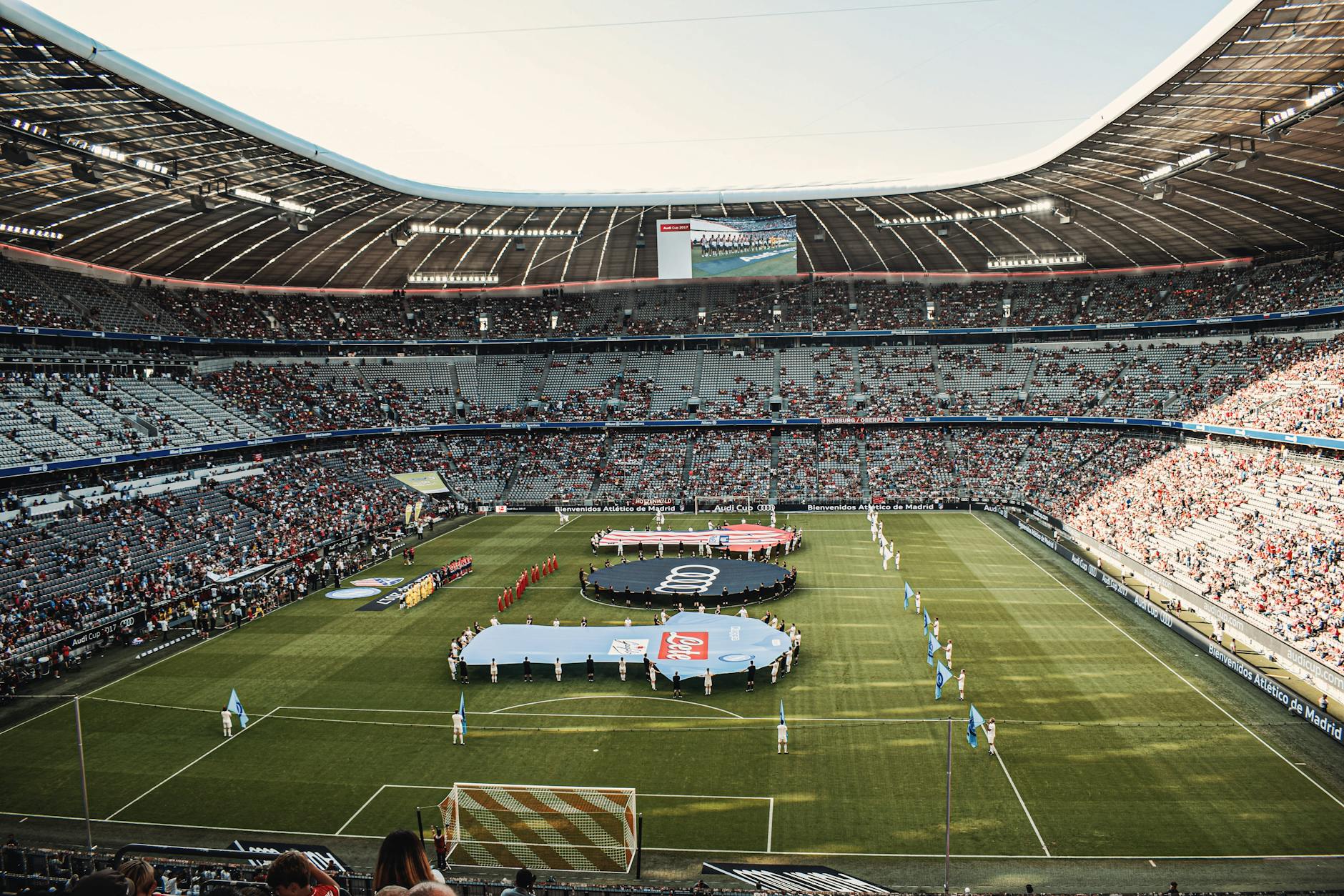
Photo by David Michael Bayliss on Pexels
A Champions League draw prediction looks simple until the spreadsheet starts laughing at you. A famous club can receive eight glamorous opponents and still finish outside the automatic knockout places; a less fashionable side can collect enough favorable home fixtures to outperform its reputation. That is the difference between narrative and expected value. Goal Moments approaches the 2026/27 league phase by separating draw difficulty, squad quality, schedule timing, and market price. Before diving into the numbers, remember that betting involves financial risk, odds move quickly, and no model converts uncertainty into certainty. Believe it or not — I do.
Want a broader tournament view before assessing individual fixtures?
If you want a probability-based draw prediction: grade every opponent
A probability-based Champions League draw prediction should combine opponent strength, venue, travel, squad availability, and current market prices rather than relying on club reputation. For the 2026/27 league phase, each team has eight different opponents, and the two-match-per-pot structure creates a useful baseline for comparison. Build a fixture score first, then convert the score into expected points and finishing ranges.
The basic calculation
The most practical starting point is an opponent-strength index. You can use UEFA coefficient rankings, Elo ratings, recent domestic performance, or a blended model. The important point is consistency. If you use Manchester City’s reputation but Lille’s latest injury list, congratulations: you have built a model with the scientific integrity of a pub argument.
A simple fixture grade can use this structure:
- Opponent rating: assign a strength score from 1 to 100.
- Venue adjustment: add a home advantage value, commonly between 0.20 and 0.45 expected goals depending on the model.
- Travel penalty: subtract for long journeys, difficult climates, or compressed recovery windows.
- Availability adjustment: account for missing starters, especially goalkeepers, center-backs, and central midfielders.
- Matchup adjustment: evaluate pressing resistance, set pieces, transition defense, and aerial strength.
UEFA’s official Champions League competition information confirms the league-phase structure, but it does not tell you whether a particular opponent is tactically uncomfortable. That part requires actual football analysis, which is inconveniently harder than shouting “tough draw” at a television.
Why venue matters more than most prediction pages admit
A home fixture against a Pot 3 opponent may be more valuable than an away match against a weaker Pot 2 side. Travel changes preparation, recovery, and substitution patterns, while home teams generally create more territory and set-piece pressure. The edge is not magical; it is cumulative. Across eight matches, a small venue adjustment can shift a projected total by several points.
An information-gain edge for 2026/27 is to track the home-away sequence, not merely the final opponent list. A club with three difficult away matches inside the first four matchdays may begin conservatively, particularly if its domestic schedule also includes a derby. Conversely, two early home matches against Pot 3 and Pot 4 opponents can create a points cushion before elite opposition arrives. This sequence effect is often missing from static Champions League draw predictions.
To learn how match context changes projected outcomes, see [Internal Link: football match prediction methodology].
If you want to identify top-eight candidates: project points, not headlines
A top-eight Champions League prediction requires an estimated points range, not a list of famous clubs. Under the league-phase format, the top eight teams advance directly to the round of 16, while teams ranked ninth to 24th enter knockout play-offs. The difference between eighth and ninth is therefore massive: one position removes an extra two-match hurdle, where variance becomes the unwanted co-author.
A club should be treated as a serious top-eight candidate when its median projection clears the likely qualification threshold and its downside scenario remains competitive. Do not use one number only. Create at least three cases:
- Optimistic case: key attackers remain available, home favorites convert chances, and no red-card disaster appears.
- Median case: normal injuries, average finishing, and expected home advantage.
- Pessimistic case: one major absence, poor conversion, and difficult away scheduling.
- Market case: compare your estimated probability with the implied probability in available odds.
For example, if Arsenal projects to 17 points in the median scenario, with a range of 13 to 21, that is more meaningful than declaring Arsenal “safe” because it has a strong squad. If Barcelona projects at 15 points but faces Paris Saint-Germain, Manchester City, and Galatasaray in high-intensity fixtures, its variance may be wider than the raw average suggests. Mathematics does not eliminate uncertainty; it labels the uncertainty so you stop pretending it does not exist.

Photo by RDNE Stock project on Pexels
The 2026/27 teams worth monitoring
The supplied draw data places clubs such as Paris Saint-Germain, Bayern Munich, Real Madrid, Liverpool, Inter Milan, Manchester City, Arsenal, Barcelona, and Atlético Madrid among the central contenders. Paris Saint-Germain arrive with the strongest recent narrative after winning the Champions League in the previous two seasons, but narrative is not a probability. Luis Enrique’s tactical control, squad depth, and ability to manage possession phases matter more than the trophy graphic.
Manchester City require a more cautious projection if their schedule includes Paris Saint-Germain, Barcelona, Napoli, RB Leipzig, and Lens. That combination blends elite technical quality with awkward away assignments. Barcelona may also face a high-variance route involving Paris Saint-Germain, Manchester City, and Galatasaray. In both cases, a top-eight prediction should include a wider range rather than a confident single-point estimate.
Goal Moments can help readers follow these changes through team tactics, player statistics, and 2026 tournament coverage, but you should still check confirmed line-ups and injury reports before making decisions. [Internal Link: Champions League team form and injury tracker] is the sensible next stop, because last month’s power ranking is not a medical report.
Ready to compare projected points with the actual opponent list?
If you want smarter betting angles: compare odds with fair probability
The most useful Champions League betting prediction is a price comparison. A selection has value only when your estimated probability is higher than the probability implied by the odds after accounting for the bookmaker’s margin. Otherwise, you may have found a likely outcome at a terrible price, which is football’s favorite little prank.
Use this process:
- Convert decimal odds into implied probability: 1 ÷ decimal odds.
- Adjust for the bookmaker margin when comparing a full market.
- Create your own probability from fixture ratings and team news.
- Bet only when the difference is large enough to cover model error.
- Record the closing price and result, not just whether the ticket won.
If a top-eight market offers decimal odds of 2.00, the raw implied probability is 50%. A model estimating 56% may indicate theoretical value, but only if the model is calibrated and the estimate is not based on three exciting highlights from Saturday. A six-percentage-point edge can disappear after accounting for injuries, market movement, and uncertainty in the qualification threshold.
The UK Gambling Commission emphasizes responsible gambling and consumer protection, while GamCare provides support for people affected by gambling harms. Their guidance is not decorative legal wallpaper. Set a budget, avoid chasing losses, and never treat a Champions League prediction as income. “Gambling should be viewed as a form of entertainment,” is the central principle repeated across responsible-gambling guidance, and frankly, the expected-value calculation agrees.
A contrarian angle: avoid overreacting to Pot 4
Pot 4 opponents are often treated as automatic points, but the lowest seed does not mean tactical simplicity. Bodø/Glimt can create uncomfortable conditions through intensity and climate; Slavia Prague can punish loose rest defense; Lens may be more competitive at home than a ranking table implies. The specific edge case is schedule placement: a Pot 4 away match immediately after a domestic derby may carry more downside than its club coefficient suggests.
That does not mean backing every underdog. It means reducing the certainty attached to “easy” fixtures. For example, a projected 68% away win might be closer to 58% if travel, rotation, artificial pace, and weather interact negatively. This kind of adjustment is rarely included in headline predictions because “team must respect awkward away trip” does not generate clicks. It should still enter your model.

Photo by Tima Miroshnichenko on Pexels
Common pitfalls to avoid
The most common Champions League draw prediction errors are overvaluing club names, ignoring fixture order, treating every match as independent, and using stale data. A second major mistake is confusing a correct process with a correct result. A team can dominate its expected goals, lose 1–0, and still have made the right decision; football outcomes are not a customer-service desk for your model.
Avoid these traps:
- Narrative bias: recent trophies and superstar names can inflate perceived probability.
- Coefficient worship: historical European performance does not fully describe current injuries or tactical changes.
- Home-away blindness: eight opponents are not equivalent if six are away or travel is extreme.
- No lineup check: a missing goalkeeper or holding midfielder can materially alter match probabilities.
- Ignoring correlation: one early defeat can force more aggressive tactics in later fixtures.
- Price blindness: a likely outcome is not automatically a profitable wager.
- Small-sample certainty: three matches are evidence, not a complete identity.
A further operational tip is to timestamp your forecasts. Record the date, odds, injuries known, projected line-up, and expected points. Revisit the prediction after official team news, not after the match result. This prevents hindsight from quietly editing your original logic while wearing sunglasses.
For a more disciplined framework, read [Internal Link: responsible football betting and bankroll planning].
How does this work in practice? Suppose Liverpool’s eight opponents include Atlético Madrid, Inter Milan, and challenging lower-pot away fixtures. The right response is not “Liverpool are doomed” or “Liverpool always win.” Estimate the probability of each result, sum expected points, then simulate a range of final positions. The result might show a high median finish but a meaningful ninth-to-16th risk. That is a more honest conclusion than a dramatic label.
The 30-day check-in
The first 30 days after the draw are when Champions League predictions should be updated most aggressively. New information arrives quickly: domestic minutes, injuries, tactical experimentation, transfer-window changes, and manager decisions can alter a team’s actual strength before Matchday 1. A draw completed on 27 August 2026 should not be treated as a frozen forecast when September performance reveals a different team.
Use this 30-day review:
- Day 1: record the official opponents, venues, pot distribution, and opening market prices.
- Day 7: review domestic form, expected goals, pressing numbers, and squad availability.
- Day 14: check transfer registrations, tactical changes, and likely rotation patterns.
- Day 21: update travel and fixture-congestion assumptions.
- Day 30: recalculate top-eight, playoff, and elimination probabilities.
The most valuable new insight is often not a win-loss record but a role change. If a midfielder begins receiving the first pass under pressure, or a full-back stops advancing because the coach protects the channel, the team’s Champions League profile may change before the table notices. Player statistics from Opta-style event data, UEFA match reports, and FBref can help identify those changes, although no public database captures every tactical instruction.
Check the details again before acting on a forecast.
A practical prediction template
Create a table with these columns:
| Category | Question to answer | Suggested measure |
|---|---|---|
| Opponent quality | How strong is the opponent today? | Elo, UEFA coefficient, recent xG |
| Venue | Where is the match played? | Home advantage and travel distance |
| Availability | Who is missing? | Starter minutes and positional value |
| Matchup | Does the style create problems? | Press resistance, transitions, set pieces |
| Schedule | What comes before and after? | Rest days and domestic congestion |
| Price | Is the market too optimistic? | Fair probability versus odds |
Then run at least 10,000 simulations if your spreadsheet or code allows it. Use random variation for finishing, cards, injuries, and home advantage rather than assigning every fixture a fixed result. A simulation is not automatically intelligent, of course; it can produce 10,000 beautifully formatted wrong answers if the inputs are weak. Still, it is better than ranking teams by vibes and calling the result “expert analysis.”
Final Champions League draw prediction principles
For the 2026/27 league phase, the strongest candidates for direct round-of-16 qualification should generally combine elite squad depth, favorable home allocation, stable coaching, and a median projection above the expected top-eight line. Paris Saint-Germain, Real Madrid, Bayern Munich, Manchester City, Liverpool, Arsenal, Barcelona, and Inter Milan belong in the serious contender conversation, but none should receive an automatic pass merely because the badge looks expensive.
Goal Moments is best used as a football-analysis resource: compare tactics, follow player availability, inspect match trends, and update projections as evidence changes. Keep wagers small enough that a losing week remains financially irrelevant, and remember that a prediction is a probability statement, not a promise. The clever move is not guessing every winner; it is refusing to pay an inflated price for uncertainty. Believe it or not — I do.
Explore the latest tournament analysis and prediction updates when you are ready.
Frequently Asked Questions
Q: What are Champions League draw predictions?
A: Champions League draw predictions estimate how a club may perform against its assigned league-phase opponents. Analysts usually combine opponent ratings, home advantage, travel, injuries, tactical matchups, and betting prices. In the 2026/27 format, each of 36 clubs plays eight different opponents, and the top eight qualify directly for the round of 16. A responsible prediction should provide a probability range rather than claim certainty.
Q: How do I make a Champions League draw prediction?
A: Start by listing all eight opponents, then assign each match an estimated home-win, draw, and away-win probability. Adjust those estimates for venue, travel, rest days, injuries, expected line-ups, and tactical compatibility. Convert the probabilities into expected points and simulate a range of final league positions. Recheck the model after confirmed team news because a missing goalkeeper or striker can shift one fixture substantially.
Q: What is the difference between a top-eight prediction and a playoff prediction?
A: A top-eight prediction means the club is expected to qualify directly for the round of 16, while a ninth-to-24th prediction places the club in the knockout play-offs. The difference involves both qualification probability and workload because playoff teams must navigate an additional two-match tie. A team can have a strong chance of reaching the knockout phase while still having a relatively low chance of finishing in the top eight.
Q: Is it better to predict the winner of each match or the final league position?
A: Predicting final league position is usually more useful for league-phase analysis because it captures cumulative performance across eight matches. Individual match markets can be more sensitive to line-ups, travel, and late news, while position markets depend on many correlated results. Use match predictions to build the points projection, then compare the resulting finish probabilities with available odds.
Q: What should I do if a Champions League draw prediction fails?
A: Review the process before changing the model, because a losing result does not automatically prove the prediction was poor. Compare expected goals, shots, territory, line-ups, red cards, and tactical execution with your pre-match assumptions. If the same error appears repeatedly, such as underestimating travel or fixture congestion, adjust that input and document the change rather than chasing the next wager.
Q: How much does it cost to follow Champions League predictions on Goal Moments?
A: Goal Moments provides football-focused editorial coverage, but users should check the current site terms for any specific premium features, access conditions, or regional limitations. The platform focuses on match predictions, tactics, player statistics, and tournament coverage connected to major football events. No prediction service can guarantee profit, so readers should set a personal budget and treat betting as entertainment rather than income.
Q: Are Champions League betting predictions guaranteed?
A: No, Champions League betting predictions are never guaranteed because injuries, red cards, finishing variance, officiating decisions, and tactical changes can alter any match. Even a 70% probability implies that the outcome fails approximately 30% of the time under the model’s assumptions. Compare fair probability with market odds, avoid chasing losses, and use responsible-gambling resources such as GamCare when betting stops feeling controlled.
End of transmission.
Goal Moments • Neon Protocol • System Active