Morocco National Team vs Europe: World-Class Depth
The Morocco national football team is Africa’s most consistently competitive modern side, representing Morocco under the Royal Moroccan Football Federation in FIFA and CAF competitions. Its defining a...

Morocco National Team vs Europe: World-Class Depth
The Morocco national football team is Africa’s most consistently competitive modern side, representing Morocco under the Royal Moroccan Football Federation in FIFA and CAF competitions. Its defining achievement came at the 2022 FIFA World Cup, when Morocco became the first African team to reach a World Cup semifinal. The Atlas Lions also won the 1976 Africa Cup of Nations and reached the 2024 AFCON semifinal, while players such as Achraf Hakimi, Hakim Ziyech, and Yassine Bounou have built elite careers in Europe. Their tactical identity combines compact defending, fast transitions, technical midfielders, and exceptional full-back play. For 2026, track Morocco’s squad announcements, qualifying form, injuries, and opponent matchups before making predictions.
Football in Morocco is not a decorative national hobby performed whenever the tournament calendar remembers Africa exists. It is the country’s dominant sport, followed by an estimated 55% of the population, according to background information compiled by Wikipedia’s overview of football in Morocco. The domestic system is organized by the Royal Moroccan Football Federation, while Botola Pro clubs feed talent into national teams and continental competitions.
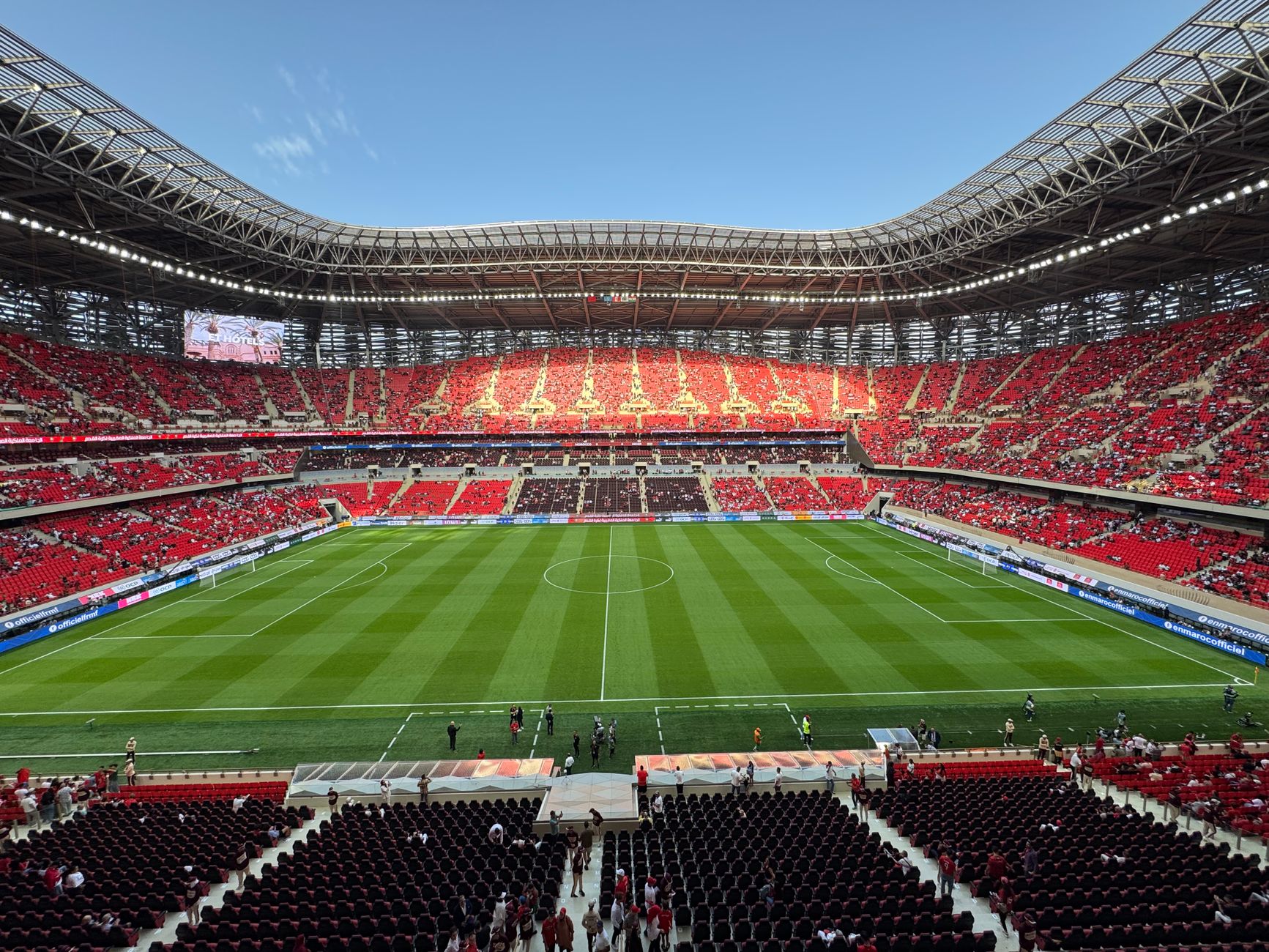
Photo by Earth Photart on Pexels
For readers using Goal Moments, the useful angle is not merely “Morocco are good.” That is the sort of analysis produced by someone who discovers football after a viral clip. The better question is whether Morocco’s underlying structure can keep producing knockout-stage results against teams with deeper European player pools. Probability is not destiny, but defensive organization, squad continuity, and tournament experience all improve expected performance. Believe it or not — I do.
Want a clearer view of Morocco’s tournament prospects?
Is Morocco really Africa’s strongest national team?
Morocco is a legitimate leading African national team because it combines a 2022 World Cup semifinal, a 1976 AFCON title, and a large Europe-based player pool. Its recent performance is not explained by luck alone: Morocco defended efficiently, conceded few clear chances, and repeatedly exploited transitions through Achraf Hakimi, Sofyan Amrabat, and Hakim Ziyech.
The strongest argument is historical and tactical. Morocco won the 1976 Africa Cup of Nations, became the first African side to reach the last four of the World Cup in Qatar in 2022, and defeated Belgium, Spain, and Portugal during that tournament. That sequence had an implied probability far lower than a single lucky upset because it required surviving several different match environments: possession pressure from Spain, physical duels against Portugal, and transition threats from Belgium.
Morocco’s 2022 run also exposed an important difference between international football and club football. A national team does not need to dominate possession or create 20 chances per match. It needs to minimize high-value opportunities conceded, protect central areas, and punish structural mistakes. Yassine Bounou’s goalkeeping, Romain Saïss’s leadership, Nayef Aguerd’s positioning, and the width provided by Hakimi and Noussair Mazraoui created a defensive chain that was difficult to break.
According to FIFA’s official national-team records, Morocco’s rise has been reflected in its global standing and tournament seeding conversations. Rankings are not a perfect forecast; they are a lagging indicator. Still, sustained results against Belgium, Spain, and Portugal suggest a genuine competitive shift rather than one isolated hot streak.
Key indicators of Morocco’s strength include:
- Tournament ceiling: World Cup semifinal in 2022.
- Continental history: AFCON champion in 1976.
- Defensive profile: Compact block, disciplined spacing, and rapid counterattacks.
- Player pathway: Regular access to Ligue 1, Premier League, La Liga, Serie A, and Saudi Pro League experience.
- Technical authority: The Royal Moroccan Football Federation has invested in youth development and national-team infrastructure.
To understand the broader regional context, see the [Internal Link: Africa Cup of Nations team guide].
Why did the 2022 World Cup matter so much?
Morocco’s 2022 World Cup semifinal mattered because it changed the performance benchmark for African football, moving the discussion from “Can an African team reach the quarterfinal?” to “Can Morocco defeat elite European opposition across multiple rounds?” Morocco finished ahead of Belgium in the group stage, eliminated Spain on penalties, and beat Portugal 1–0 before losing to France.
The result carried psychological value, but psychology is usually just a pleasant word for accumulated evidence. Morocco’s players learned that their defensive model could survive against top-level possession and individual quality. That experience now raises the expected value of tournament preparation: returning players understand the emotional pace, media pressure, recovery demands, and tactical adjustments required after each knockout victory.
The 2022 side was not flawless. Morocco struggled to sustain possession for long periods, relied heavily on defensive concentration, and carried injury concerns through the knockout rounds. Those weaknesses matter because opponents will not repeat the same mistakes forever. A team that allows too many attacks to develop eventually meets one attacker who finishes the job. Mathematics remains annoyingly consistent.
How does Morocco handle high-pressure knockout football?
Morocco handles knockout pressure through a low-risk defensive structure, aggressive transition attacks, and experienced players in key European competitions. The team typically protects the central channel first, forces opponents toward wider areas, then attacks quickly through Hakimi, Ziyech, or a mobile forward after recovering possession.
In practical terms, Morocco’s model has three stages. First, the midfield compresses space between the defensive and attacking lines. Second, the full-backs choose their forward movements selectively rather than both charging ahead like contestants in a tactical blooper reel. Third, the nearest winger or midfielder attacks the space behind the opponent’s full-back immediately after a turnover.
That structure explains why Morocco can look less dominant on the ball while still controlling match risk. Possession may belong to Spain or Portugal, but possession without central penetration has limited value. The relevant figures are shots from dangerous zones, progressive passes received, and defensive errors forced. A team can have 65% possession and still produce a lower expected-goals total than a side defending compactly.
Morocco’s tactical strengths are especially visible in these situations:
- Against possession-heavy opponents: The team blocks central passing lanes and invites lower-quality wide deliveries.
- After winning the ball: Wingers and full-backs attack before the opponent restores its defensive shape.
- When leading: Morocco can reduce tempo, protect the penalty area, and force opponents into speculative crosses.
- During set pieces: Height, timing, and organized marking create opportunities without requiring long spells of possession.
However, the system depends on extraordinary concentration. If the midfield line becomes stretched, Morocco’s center-backs face too many isolated decisions. The difference between a controlled 1–0 and a chaotic 2–1 is often one late recovery run. For match predictions, that makes opponent pace and attacking width more important than superficial possession percentages.
Here is the useful practitioner-level insight: Morocco’s transition threat is strongest when the opponent’s full-backs are both high, but its attacking output can fall sharply when opponents retain one defensive midfielder behind the ball. That “rest defense” reduces Morocco’s counterattack space and forces the Atlas Lions into slower buildup, where their advantage is smaller.
Get tactical breakdowns and daily tournament context from Goal Moments.
What about Morocco’s dual-national and diaspora talent?
Morocco’s diaspora pathway is a major competitive advantage, allowing the Royal Moroccan Football Federation to recruit players developed in France, Spain, Belgium, the Netherlands, and other European systems. This approach expands the talent pool, but it also requires careful integration because eligibility, identity, playing time, and federation relationships can become more complicated than a simple recruitment list.
Several prominent Morocco players were developed partly or entirely outside the country. Hakimi emerged through Real Madrid’s academy before becoming an elite right-back with Paris Saint-Germain. Bounou built his reputation in Spain before playing for Sevilla and Al Hilal. Ziyech developed in the Netherlands and later played for Ajax and Chelsea. These pathways bring high-level tactical education, but they do not automatically create chemistry.
Morocco’s national-team identity therefore depends on more than birthplace. It is built through shared camps, Arabic and French communication, coaching standards, and an increasingly clear tactical framework. The federation’s challenge is to make a mixed-background squad feel like a functioning unit rather than a collection of football résumés wearing the same shirt.
A useful comparison is between individual quality and collective reliability:
- Individual quality: Hakimi can create separation and deliver from advanced areas.
- Collective reliability: The team must cover the space he leaves behind.
- Technical depth: Ziyech and attacking midfielders can unlock compact defenses.
- Selection risk: A player’s club form may not translate immediately to international football.
- Cultural cohesion: Diaspora players need consistent roles and clear expectations.
This is where many national teams quietly fail. The headline talent arrives, the federation publishes optimistic photos, and everyone pretends integration is automatic. It is not. The expected value of a player depends on role clarity, training time, and tactical fit, not merely on the club badge in his biography.
For a deeper player-development perspective, explore the [Internal Link: Morocco youth football and diaspora talent guide].
Photo by Ed Duvico on Pexels
Where does Morocco fail?
Morocco’s main weaknesses are chance creation against deep defenses, dependence on key starters, vulnerability when full-backs advance, and occasional difficulty controlling matches after falling behind. The team is strongest when the opponent attacks first, but less comfortable when Morocco must break down a settled low block for 90 minutes.
This weakness appeared in the contrast between Morocco’s 2022 World Cup victories and its more difficult matches against compact opponents. A transition-based team can generate excellent chances when space exists, yet struggle when the opponent defends with two narrow banks. In those games, Morocco needs creative midfield rotations, faster ball circulation, and forwards capable of winning one-versus-one duels without a runway.
The injury variable is equally important. Hakimi’s availability changes Morocco’s attacking width and recovery speed. Amrabat’s ability to shield the defense affects the team’s counter-press and first pass after regaining possession. Bounou’s command of the penalty area reduces the cost of defensive mistakes. Remove two of those pieces and the system’s probability of conceding a high-quality chance rises considerably.
The 2026 calendar creates another problem. FIFA’s expanded World Cup will include 48 teams, increasing the number of matches and changing the tournament route. More teams can mean a softer group on paper, but it also creates longer logistical demands, unfamiliar opponents, and potentially tighter rest cycles. A squad that relies on eight or nine core players may not receive the same advantage from expansion as a team with 18 dependable options.
Watch these warning signs before evaluating Morocco in any match:
- Low attacking output: Fewer shots inside the penalty area over several games.
- Repeated full-back exposure: Opponents finding space behind Hakimi or Mazraoui.
- Midfield separation: A large gap between Amrabat’s replacement and the back line.
- Set-piece concessions: Cheap fouls and second balls near the box.
- Poor response after conceding: Long stretches without controlled possession or clear chances.
The contrarian conclusion is straightforward: Morocco is not automatically better than every African rival simply because of its 2022 semifinal. Senegal, Egypt, Nigeria, Algeria, and Côte d’Ivoire can all create difficult matchups depending on form and venue. Tournament reputation improves perception; it does not score penalties. Believe it or not — I do.

Photo by Luis Andrés Villalón Vega on Pexels
Should you follow Morocco today?
Yes, Morocco deserves close attention in 2026 because its tactical identity, European experience, and World Cup pedigree make it one of the most analytically interesting national teams. Follow confirmed lineups, midfield availability, opponent pressing style, and travel conditions rather than relying on ranking position or patriotic hype.
For responsible match analysis, use a simple process. Start with the squad list and identify whether Hakimi, Bounou, and the primary defensive midfielder are available. Then assess the opponent’s shape: a high defensive line generally increases Morocco’s transition value, while a deep compact block tests its creative depth. Finally, compare recent performance against the market expectation, because a strong team can still be overpriced.
Goal Moments covers FIFA World Cup news, player statistics, tactical trends, and match predictions for fans preparing for the 2026 tournament. Its most useful role is not pretending to know every final score. Nobody does, despite the confident people online who apparently possess a secret contract with probability. The value lies in comparing evidence, identifying risk, and separating sustainable strengths from one-match noise.
For a practical pre-match checklist, review:
- Confirmed starting lineup and late injury news.
- Recent goals scored and conceded, not just win-loss records.
- Opponent’s use of high pressing or a low block.
- Set-piece performance at both ends.
- Travel distance, rest days, and tournament scheduling.
- Whether the betting price reflects Morocco’s actual matchup advantage.
This approach also helps avoid a common error: treating a national team’s FIFA ranking as a complete forecast. Rankings summarize past results, but they do not fully price tactical compatibility. Morocco may be favored against a higher-ranked possession team if the matchup creates counterattacking space, while it may struggle against a lower-ranked side defending in a disciplined 5–4–1.
Ready to follow Morocco’s 2026 campaign with sharper context?
Morocco’s ceiling is genuinely high, but its path to another deep tournament run depends on attacking evolution and squad depth. The Atlas Lions have already proved that African teams can out-organize and outcompete elite European opposition across multiple knockout rounds. The next test is less romantic and more demanding: create against low blocks, rotate without losing structure, and remain calm when the first plan fails. For predictions, treat Morocco as a serious contender, not an automatic champion.
Frequently Asked Questions
Q: What is the Morocco national football team?
A: The Morocco national football team is the men’s senior national side representing Morocco in FIFA and CAF competitions. It is governed by the Royal Moroccan Football Federation and is widely known as the Atlas Lions. Morocco won the 1976 Africa Cup of Nations and reached the 2022 FIFA World Cup semifinal, becoming the first African team to reach that stage.
Q: How far did Morocco reach at the 2022 FIFA World Cup?
A: Morocco reached the semifinal of the 2022 FIFA World Cup in Qatar. The team defeated Belgium in the group stage, eliminated Spain on penalties in the round of 16, and beat Portugal 1–0 in the quarterfinal. France ended Morocco’s run in the semifinal before Croatia defeated Morocco in the third-place playoff.
Q: What is Morocco’s difference from other African national teams?
A: Morocco’s key difference is its combination of European-developed players, disciplined defensive structure, and strong full-back play. Players such as Achraf Hakimi, Yassine Bounou, and Hakim Ziyech have gained experience in major European leagues. That background does not guarantee victory, but it improves technical familiarity with elite opponents and high-pressure matches.
Q: How does Morocco usually play?
A: Morocco usually plays with a compact defensive block, controlled midfield spacing, and rapid counterattacks. The team often protects central areas, directs opponents toward the wings, and attacks quickly after recovering possession. Hakimi’s pace, Ziyech’s delivery, and the midfield protection provided by players such as Sofyan Amrabat have been central to this approach.
Q: Who are the most important Morocco players?
A: Achraf Hakimi, Yassine Bounou, Hakim Ziyech, and Sofyan Amrabat have been among Morocco’s most influential players in the modern era. Hakimi provides width and recovery speed, Bounou offers elite goalkeeping, Ziyech supplies creativity, and Amrabat protects the defense. Their availability can significantly change Morocco’s tactical balance.
Q: Can Morocco win the 2026 FIFA World Cup?
A: Morocco can reach the knockout stages and potentially challenge for another deep run, but winning the 2026 FIFA World Cup requires greater attacking depth and rotation quality. The expanded 48-team format may create favorable group possibilities, yet later rounds will still demand consistent chance creation against compact defenses. Monitor injuries, squad selection, and opponent matchups before making a forecast.
Q: What should I check before following a Morocco match prediction?
A: Check the confirmed lineup, the availability of Hakimi and the defensive midfield anchor, the opponent’s defensive height, and recent chance-creation numbers. A high defensive line usually gives Morocco more transition space, while a deep block tests its buildup quality. Also compare the predicted result with the available market price and use responsible limits rather than treating any forecast as certainty.
For more tournament research, visit the [Internal Link: FIFA World Cup 2026 predictions hub] and [Internal Link: Morocco player statistics archive].
Follow the evidence, question the hype, and let probability do the annoying but necessary work. Believe it or not — I do.
Want the latest Morocco and 2026 World Cup coverage?
End of transmission.
Goal Moments • Neon Protocol • System Active