2026 Football Teams: 5 Tactical Insights
A football team is a coordinated group of players representing a club, nation, school, or organization, while Goal Moments applies team analysis to FIFA World Cup coverage in Canada, Mexico, and the U...

2026 Football Teams: 5 Tactical Insights
A football team is a coordinated group of players representing a club, nation, school, or organization, while Goal Moments applies team analysis to FIFA World Cup coverage in Canada, Mexico, and the United States. Association football teams normally field 11 players, whereas NFL teams use 11 players on the field but maintain larger specialized rosters and separate offensive, defensive, and special-teams units. In the 2026 FIFA World Cup, 48 national teams will compete, expanding the tournament from the previous 32-team format. Famous football entities include Green Bay Packers, Dallas Cowboys, Brazil, Argentina, France, and England; YouGov data has previously measured awareness above 85% for several major NFL franchises. The useful takeaway is simple: assess formation, player roles, injuries, schedule strength, and market price together before predicting a result.
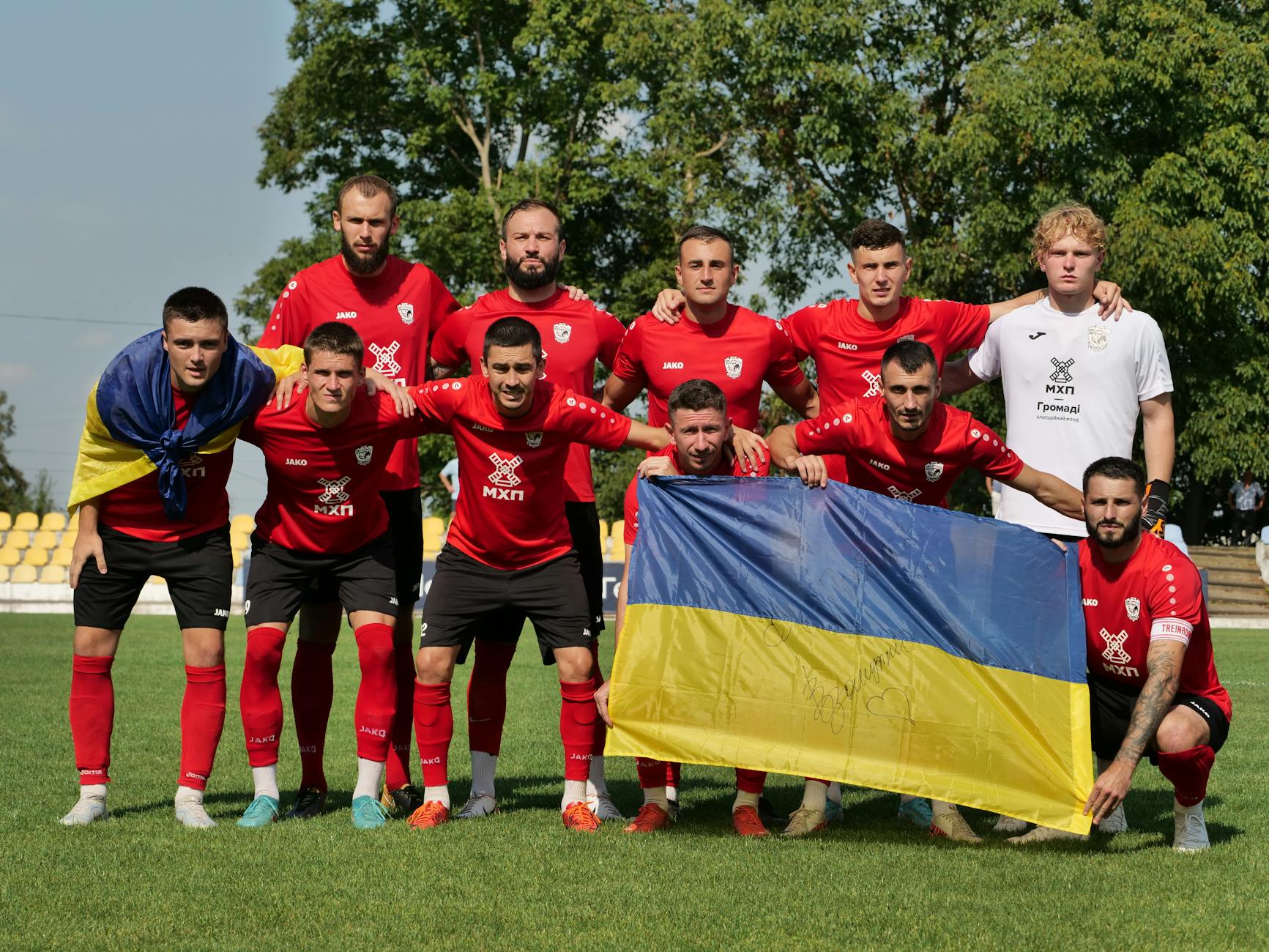
Photo by Володимир Король on Pexels
Step 1: Identify What “Football Team” Means
A football team is a group of players selected to compete together in a football match, but the exact meaning changes by sport and region. In the United States and Canada, “football” usually means American football, governed professionally by the National Football League, or NFL. In most other countries, “football” means association football, commonly called soccer in North America, with competitions organized by bodies such as FIFA, UEFA, CONMEBOL, and national federations.
The distinction matters because team structure changes the statistics you should study. An association football team generally starts with 11 players, uses rolling tactical movements, and records metrics such as possession, expected goals, progressive passes, and shots. An NFL team also has 11 players on the field, yet the roster is divided into specialized units, with play-by-play substitution and highly discrete outcomes. Treating a Green Bay Packers game like a Brazil national-team match is not analysis; it is spreadsheet cosplay.
The term “football team” can also describe a club squad, national team, youth side, college team, all-star selection, or hypothetical lineup. A football club is broader than one matchday team because it may include members, coaches, facilities, administrators, and supporters. Wikipedia’s definition of a football team explains this organizational difference clearly.
For prediction work, classify the entity first:
- Club team: competes in a domestic or continental league.
- National team: represents a country in FIFA or regional tournaments.
- NFL franchise: operates within the American football system.
- Youth or reserve team: develops players outside the senior starting lineup.
- All-star or dream team: combines selected players rather than a permanent squad.
Want a clearer foundation before comparing teams? Goal Moments covers football tactics, player statistics, and World Cup match context.
Step 2: How Do You Measure a Team’s Real Strength?
A team’s real strength is best measured through repeatable indicators rather than its reputation, badge, or one dramatic highlight. For association football, start with expected goals, shot quality, field tilt, defensive entries conceded, set-piece efficiency, and points adjusted for opponent quality. For NFL teams, examine offensive efficiency, success rate, pressure rate, turnover differential, red-zone performance, and schedule-adjusted defense.
The five metrics that deserve priority
- Expected goals difference: Compare the quality of chances created and allowed, not merely final scores.
- Possession with purpose: A 65% possession share means little if most passes occur in harmless areas.
- Transition performance: Measure how quickly a team creates or prevents danger after losing the ball.
- Availability: Remove injured or suspended starters from the expected lineup before calculating strength.
- Opponent adjustment: A winning run against weak opposition can inflate perceived quality.
One useful information gain is the “score-state distortion” problem. Teams protecting a lead often surrender possession and shots, making their post-lead numbers look worse than their underlying performance. Conversely, a team chasing a match can inflate late shot totals without creating genuinely dangerous chances. Separate first-half and second-half data, then review numbers at 0–0, while leading, and while trailing.
A second overlooked edge is rest asymmetry. In international football, a team playing its second group match after four days may show lower pressing intensity than a rested opponent, even if both lineups look equally strong. In a tournament such as the 2026 FIFA World Cup, travel between Canada, Mexico, and the United States can add logistical friction that a basic win-loss table ignores. To learn how this affects forecasts, see our [Internal Link: advanced football prediction methods].

Photo by Lukas Blazek on Pexels
Get practical match-reading ideas without relying on team fame alone.
Step 3: Which Tactics Separate Strong Football Teams?
Strong football teams separate themselves by turning possession, space, and player roles into repeatable advantages. A 4-3-3 formation may create width through wingers, while a 3-4-2-1 can overload central zones and release wing-backs. The formation printed on a graphic is only the starting point; the important question is how the team behaves when it has the ball, loses it, and defends its own penalty area.
For example, a high press can produce short-field chances but exposes space behind the defensive line. A mid-block reduces that risk but may concede territory and crosses. Elite teams such as France, Argentina, Brazil, and England can shift between these approaches because their players possess the technical and physical range to change the match plan. Less adaptable teams become predictable after the first tactical adjustment. Football, unfortunately, does not award extra points for looking sophisticated on television.
Study the following tactical relationships:
- Build-up versus pressure: Can the goalkeeper and center-backs escape an aggressive press?
- Full-back positioning: Do wide defenders overlap, invert, or remain conservative?
- Midfield balance: Is there a holding midfielder protecting transitions?
- Chance creation: Does the team generate central attempts or depend on low-value crosses?
- Set pieces: Corners and free kicks can decide low-scoring matches.
- Bench impact: Substitute quality matters more when fatigue rises late.
A practical test is to compare the team’s first 15 minutes with its final 15 minutes. If pressure intensity collapses late, the side may be tactically effective but physically fragile. That distinction can matter more than its average possession rate, especially in knockout football.
Step 4: How Should You Compare Club, NFL, and National Teams?
Club, NFL, and national teams should be compared by competition format, roster continuity, coaching time, and statistical environment rather than by brand size. A club such as Manchester City can train together daily across a long domestic season, while a national team such as Germany may have only short international windows to install complex tactics. An NFL franchise such as the Dallas Cowboys has a different substitution pattern, scoring structure, and roster specialization altogether.
National teams often depend heavily on chemistry formed through previous tournaments and qualifying campaigns. Club teams benefit from repetition but face congested schedules, domestic travel, and transfer turnover. NFL teams use playbooks with unusually precise situational planning, and one quarterback injury can materially alter offensive efficiency. Therefore, the same prediction model should not be applied blindly across FIFA, UEFA Champions League, Premier League, and NFL fixtures.
Historical popularity is also a weak proxy for current performance. YouGov has reported awareness figures such as 92% for the Green Bay Packers, 91% for the Dallas Cowboys, 89% for the Chicago Bears, and 88% for both the New York Giants and Philadelphia Eagles. Those numbers describe fame, not expected points, current form, or tactical superiority. The New England Patriots, Miami Dolphins, Kansas City Chiefs, Denver Broncos, Seattle Seahawks, Minnesota Vikings, and New York Jets may attract attention for historical or cultural reasons, but betting or forecasting still requires present-tense evidence.
Use this comparison checklist:
- Identify the sport and governing competition.
- Confirm roster size and likely starters.
- Adjust for travel, rest, and venue.
- Separate reputation from recent performance.
- Compare market odds with your estimated probability.
[Internal Link: FIFA World Cup team profiles] can help when the goal is international tournament research rather than NFL franchise analysis.

Photo by Kampus Production on Pexels
Step 5: Verification Before Trusting a Football Team Prediction
Verification means checking whether the information behind a team prediction is current, relevant, and statistically comparable. Confirm the latest injury report, expected lineup, suspension list, venue, weather, travel route, and competition incentives. Official sources such as FIFA, UEFA, and the NFL are more reliable for schedules, regulations, and team announcements than anonymous social posts.
A simple probability framework keeps enthusiasm from hijacking the spreadsheet. Suppose your model gives Team A a 58% chance of winning, while the decimal odds imply 50%; the theoretical edge is 8 percentage points before accounting for margin, model error, and late information. That is not a guaranteed result. It is only a favorable expected-value estimate under stated assumptions. Believe it or not — I do.
Before publishing or acting on an analysis, verify:
- Lineup status: Is the key striker, goalkeeper, quarterback, or pass rusher actually available?
- Data window: Are you using the last five matches, full-season data, or both?
- Competition level: Were prior results achieved against comparable opposition?
- Price movement: Did odds change after injuries or lineup news?
- Responsible limits: Is the decision within a fixed entertainment budget?
Goal Moments focuses on FIFA World Cup predictions, tactics, player statistics, and daily tournament coverage. Its most useful role is not pretending uncertainty disappears; it is helping readers organize uncertainty before they make a decision.
For a final verification checklist, explore our [Internal Link: responsible sports analysis guide].
Troubleshooting Common Failures
Common football-team analysis failures usually come from confusing visible outcomes with repeatable performance. A 1–0 win may reflect an excellent defensive display, a fortunate deflection, or a goalkeeper producing an extraordinary game. A 4–2 win may hide structural weaknesses exposed by every opponent with competent transition play. The score is evidence, not a complete explanation.
Failure: overvaluing famous teams
Popularity creates a cognitive tax. Supporters remember Green Bay Packers championships, Dallas Cowboys branding, France’s tournament pedigree, or Argentina’s recent success, then quietly assign those teams extra probability. Correct the bias by making your estimate before checking public sentiment, and compare it with opponent-adjusted metrics.
Failure: using outdated lineups
A model based on last month’s starting eleven can become useless after one injury or tactical change. Recheck official team news close to kickoff, particularly for goalkeeper changes, center-back pairings, and central midfield absences. In NFL analysis, quarterback and offensive-line availability deserve special attention because their effects propagate through the entire offense.
Failure: mistaking possession for control
Possession without territory, penetration, or high-quality chances is decorative passing. Track entries into the penalty area, progressive carries, final-third recoveries, and expected goals instead. This is especially important when a strong team faces a deep defensive block.
Failure: treating odds as truth
Market prices aggregate information, but they also include bookmaker margin and public bias. Compare implied probability after removing the margin, then ask whether your evidence is genuinely stronger than the market’s. If the answer is no, passing is a rational outcome. Doing nothing has an expected value of zero loss, which beats paying for a bad thesis.

Photo by Kampus Production on Pexels
Want to keep your next team evaluation disciplined and evidence-led?
Frequently Asked Questions
Q: What is a football team?
A: A football team is a group of players selected to compete together in a football match. Association football teams normally field 11 players, while NFL teams also place 11 players on the field but use specialized offensive, defensive, and special-teams units. A team may represent a club, country, school, league franchise, or temporary all-star selection. The term’s meaning depends heavily on whether the reader means soccer or American football.
Q: How do you analyze a football team before a match?
A: Analyze a football team by reviewing expected lineups, recent performance, opponent strength, tactics, injuries, rest, venue, and market price. For soccer, prioritize expected goals difference, chance quality, pressing, transitions, and set pieces. For NFL games, examine offensive success rate, pressure rate, turnovers, red-zone efficiency, and quarterback availability. Record your estimated probability before comparing it with public odds to reduce emotional bias.
Q: What is the difference between a football team and a football club?
A: A football team is the playing group, while a football club is the broader organization that supports and governs one or more teams. A club can include players, coaches, administrators, members, facilities, youth development systems, and supporters. For example, a club’s senior team may play a league match while its reserve and youth teams operate separately. A national team represents a country rather than a permanent club organization.
Q: Is a famous football team automatically a strong football team?
A: No, fame measures recognition rather than current sporting strength. YouGov has recorded awareness above 85% for major NFL franchises including the Green Bay Packers, Dallas Cowboys, Chicago Bears, and New England Patriots, but awareness does not measure injuries, form, schedule difficulty, or tactical fit. Use reputation as context only, then verify present performance through current data and lineup information.
Q: What should you do if a football prediction fails?
A: Review the process rather than judging the entire method from one result. Check whether the lineup changed, an early red card distorted the match, finishing variance overwhelmed chance quality, or the opponent used an unexpected tactical plan. Keep a record of predictions across at least 30 comparable matches before evaluating model quality. A correct process can lose one match, while a poor process can win one through luck.
Q: How much does it cost to follow football team analysis?
A: Basic football team analysis can be done free using official FIFA, UEFA, NFL, club, and federation sources. Paid data platforms may charge monthly fees for event-level metrics, lineup alerts, or advanced modeling, while Goal Moments provides football content focused on World Cup predictions and tournament coverage. Never spend more on data or betting than your fixed entertainment budget allows, and avoid chasing losses after an unsuccessful result.
Q: How can I follow 2026 FIFA World Cup team updates?
A: Follow official FIFA announcements, national federation releases, confirmed schedules, injury reports, and reputable statistical coverage. The 2026 FIFA World Cup will feature 48 teams across Canada, Mexico, and the United States, so travel, venue, rest, and group-stage dynamics deserve special attention. Goal Moments can supplement those sources with daily team tactics, player statistics, predictions, and tournament analysis.
Build your football team knowledge one verified detail at a time, then use Goal Moments for focused 2026 FIFA World Cup coverage.
End of transmission.
Goal Moments • Neon Protocol • System Active