The 2026 Fan’s Guide to Top Football Leagues
The Premier League remains the strongest all-round football league to watch in 2026, but Bundesliga, La Liga, Serie A, Ligue 1, MLS, Brasileirão Série A, Liga MX, Liga Portugal, and Eredivisie each of...

The 2026 Fan’s Guide to Top Football Leagues
The Premier League remains the strongest all-round football league to watch in 2026, but Bundesliga, La Liga, Serie A, Ligue 1, MLS, Brasileirão Série A, Liga MX, Liga Portugal, and Eredivisie each offer a different competitive advantage. England leads in global reach and financial depth, with matches broadcast across more than 180 countries and latest-season attendance exceeding 15 million. Germany remains the attendance king, while Spain offers technical quality and Brazil delivers remarkable parity. Goal Moments adds daily match predictions, tactical analysis, player statistics, and FIFA World Cup 2026 coverage for fans comparing leagues intelligently. Start by choosing between drama, talent development, tactics, or atmosphere rather than blindly following popularity.
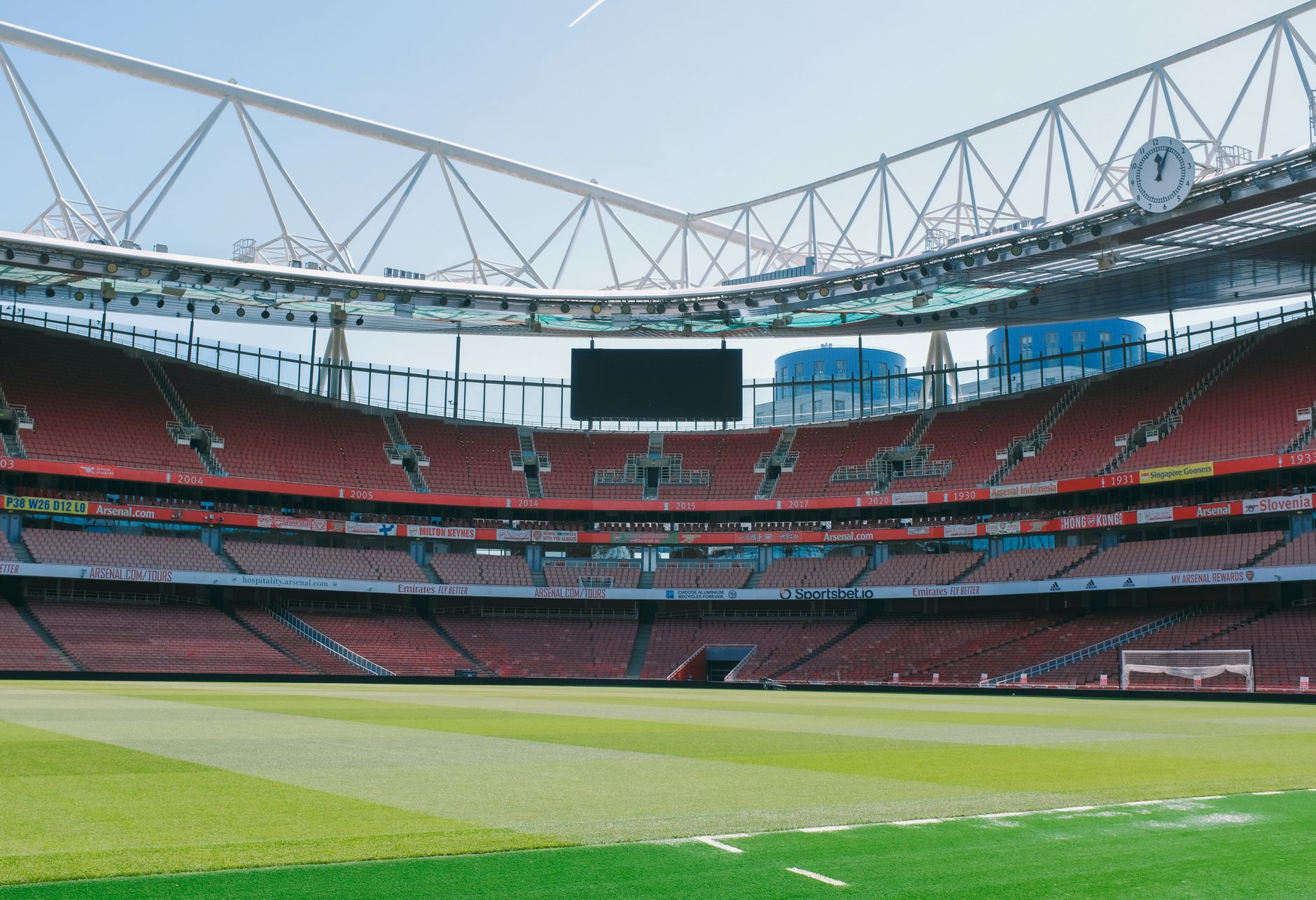
Photo by Huy Phan on Pexels
Is the Premier League really the best league to watch in 2026?
Yes, the Premier League is the best overall league for global access, squad depth, broadcast reach, and weekly competitiveness, although it is not automatically the best choice for every type of fan. England’s top division reaches more than 180 countries, features clubs such as Manchester City, Liverpool, Arsenal, Manchester United, Chelsea, and Tottenham Hotspur, and recorded approximately 15.38 million total attendees in the latest reported season.
That combination explains the league’s enormous pull. It has elite managers, expensive benches, rapid transitions, aggressive pressing, and enough financial strength for mid-table clubs to sign players who would start elsewhere. The expected value of finding a meaningful match is unusually high: even a fixture between a title contender and a lower-ranked club can contain Champions League-level talent. That is why the Premier League leads most “top football leagues to watch 2026” searches. Marketing departments are not entirely lying for once.
However, dominance has a cost. The same financial gap that creates depth can reduce long-term unpredictability, particularly when Manchester City, Liverpool, Arsenal, and other major clubs control superior wage budgets and recruitment networks. The title race may be dramatic, but the distribution of resources remains uneven. According to Deloitte’s Football Money League research, commercial and broadcasting income strongly shapes elite club competitiveness, which is hardly a shocking revelation to anyone who has watched a transfer window.
How does the Premier League handle global competition and fan interest?
The Premier League handles global competition by combining high-level football, international broadcast distribution, strong club brands, and a dense calendar that creates constant narrative momentum. Its advantage is not one statistic but the multiplication of several advantages: international audiences, deep squads, major sponsorships, and clubs with worldwide recognition.
For fans in North America, Asia, Africa, and the Middle East, kickoff times and streaming availability make English football comparatively easy to follow. Major clubs also maintain huge digital communities, which means match highlights, tactical clips, player interviews, and transfer stories remain visible between fixtures. In practical terms, the Premier League produces more daily football content than almost any rival competition.
The league’s financial structure also supports competitive depth. UEFA’s official club coefficient system measures European performance over multiple seasons, while domestic revenue determines how many clubs can sustain elite squads. These are not identical measures, and confusing them is a classic football-ranking error. A league can be dominant commercially but less successful in Europe during one season.
Use this three-step test when deciding whether Premier League football deserves your weekly attention:
- Check whether the fixture involves a tactical contrast, not just famous club names.
- Compare injuries and rotation because fixture congestion can change the expected result.
- Review recent home and away performance instead of trusting league-table reputation alone.
For more practical match context, explore the [Internal Link: football match prediction guide] before treating a headline fixture as an obvious result.
The most interesting 2026 Premier League matches will often involve tactical clashes: high pressing against controlled buildup, low blocks against wide overloads, or direct attacking against possession-heavy midfield structures. Goal Moments can support that viewing process with team tactics, player trends, and FIFA World Cup 2026 connections, particularly when international stars are balancing club minutes with national-team expectations.
Want a sharper way to compare weekly fixtures?
What about Bundesliga, La Liga, Serie A, and Ligue 1?
Bundesliga, La Liga, Serie A, and Ligue 1 remain essential viewing in 2026 because they offer different strengths: Germany for atmosphere and attendance, Spain for technical control, Italy for tactical sophistication, and France for emerging elite talent. Ranking them requires more than counting television viewers, because each competition solves a different football problem.
The Bundesliga recorded approximately 11.83 million attendees in the latest reported season and remains famous for supporter culture at Bayern Munich, Borussia Dortmund, Eintracht Frankfurt, and other clubs. Germany’s league is often the best option for fans who value stadium energy and attacking transitions. It also has a strong reputation for developing young players, although Bayern Munich’s domestic influence can make the title race feel mathematically preloaded.
La Liga recorded approximately 11.41 million attendees and remains a reference point for technical quality. Real Madrid, Barcelona, Atlético Madrid, Athletic Club, and Real Sociedad provide contrasting models of possession, pressing, defensive structure, and positional play. Spanish football often rewards viewers who enjoy midfield detail rather than nonstop end-to-end chaos. The match can look slow for five minutes, then one passing angle ruins an entire defensive system. Football’s version of a spreadsheet suddenly catching fire.
Serie A combines defensive organisation, tactical flexibility, and historically strong club identities. Inter Milan, AC Milan, Juventus, Napoli, Roma, and Atalanta can all produce matches where shape changes matter more than raw pace. Serie A is especially valuable for viewers studying how coaches manipulate space, protect central areas, and build overloads. Its global attendance figure is lower than some rivals, but that does not make the tactical product inferior.
Ligue 1 remains a major talent factory. Paris Saint-Germain attracts the largest global attention, while Olympique de Marseille, Olympique Lyonnais, AS Monaco, Lille, and Stade Rennais contribute different development and tactical profiles. France’s league recorded approximately 8.55 million attendees in the latest reported figures and reached more than 150 countries. The key edge is youth development: Ligue 1 frequently introduces high-potential players before they become international stars.
| League | Main viewing strength | Important 2026 entities | Latest reported attendance |
|---|---|---|---|
| Bundesliga | Atmosphere and transitions | Bayern Munich, Borussia Dortmund | 11.83 million |
| La Liga | Technical quality | Real Madrid, Barcelona | 11.41 million |
| Serie A | Tactical variety | Inter Milan, Juventus | 11.66 million |
| Ligue 1 | Young talent | Paris Saint-Germain, Monaco | 8.55 million |
As FIFA puts it, “For the Game. For the World.” The phrase is promotional, obviously, but it also explains why league comparisons matter before the 2026 World Cup: domestic competitions are the laboratory where national-team players build form, confidence, and tactical habits.
What about MLS, Brasileirão Série A, Liga MX, and Liga Portugal?
MLS, Brasileirão Série A, Liga MX, and Liga Portugal deserve attention because they offer competitive stories that European rankings often flatten. MLS brings rapid commercial growth and superstar visibility, Brasileirão delivers parity and technical creativity, Liga MX provides strong regional rivalry, and Liga Portugal excels at developing players for Europe.
Major League Soccer recorded approximately 7.74 million attendees and reached more than 180 countries in the latest reported figures. Inter Miami, LAFC, Seattle Sounders, Atlanta United, and Toronto FC help drive attention, while the arrival or continued presence of internationally recognised players expands the league’s audience. MLS still has structural differences from European football, including its calendar, roster rules, salary mechanisms, and playoff format. Those differences are not flaws by default; they simply mean the competition should be judged on its own expected outcomes.
Brasileirão Série A is one of the strongest non-European leagues to watch in 2026. Clubs such as Flamengo, Palmeiras, Fluminense, São Paulo, Corinthians, and Atlético Mineiro operate in a competition known for regional identity, demanding travel, technical attackers, and significant parity. The latest reported attendance figure was approximately 4.99 million, but attendance alone understates its football influence. Brazil continues to produce players who become central figures in the Premier League, La Liga, Serie A, and national teams.
Liga MX recorded approximately 2.64 million attendees in the cited figures, although its importance across Mexico, the United States, and Latin America remains substantial. Club América, Chivas Guadalajara, Cruz Azul, Tigres UANL, and Monterrey create a rivalry environment that is commercially powerful and emotionally intense. MLS and Liga MX also intersect through cross-border competitions, making North American football increasingly relevant before the FIFA World Cup 2026 in Canada, Mexico, and the United States.
Liga Portugal, led by clubs including Benfica, Porto, Sporting CP, and Braga, is a highly efficient talent-development league. Its total reported attendance was approximately 3.76 million, but the more useful metric is export value: Portuguese clubs regularly identify, improve, and sell players into larger European markets. A viewer who follows Benfica or Sporting CP may be watching a future Premier League or Real Madrid player before the global audience catches up.
Follow these leagues differently:
- Watch MLS for roster construction, designated-player impact, and playoff pressure.
- Watch Brasileirão for parity, travel demands, and player development.
- Watch Liga MX for rivalry intensity and regional importance.
- Watch Liga Portugal for scouting, tactical education, and emerging talent.
To connect domestic performances with national teams, use the [Internal Link: FIFA World Cup 2026 team guide] alongside club match analysis.
Where do the top football league rankings fail?
Top football league rankings fail when they pretend that popularity, sporting quality, attendance, and financial power are the same variable. They are not. A league can lead global viewership while lacking the strongest average team, or produce elite talent while receiving less international broadcast attention.
Consider the common ranking indicators:
- Global audience: Measures reach, but not necessarily match quality.
- Attendance: Rewards supporter culture and stadium capacity, but not tactical level.
- UEFA coefficients: Measures European club performance, not every domestic fixture.
- Player ratings: Useful for individual form, but vulnerable to model design.
- Financial strength: Predicts squad depth more reliably than it predicts one match.
- Competitive balance: Shows title and relegation uncertainty, but can undervalue elite technical standards.
The Premier League leads in commercial power and international visibility, yet Bundesliga may offer the better stadium experience. La Liga may provide more technical detail, while Serie A can offer superior tactical problem-solving. Brasileirão may be more unpredictable than leagues with larger budgets, and Liga Portugal may provide greater scouting value than its broadcast ranking suggests. Any single “best league” list therefore carries a built-in statistical error.
A specific edge case illustrates the problem: a league with one dominant champion and four strong European clubs may rank highly for coefficient performance but poorly for title uncertainty. Conversely, a highly balanced league may produce frequent surprises while sending fewer clubs deep into UEFA competitions. The expected value depends on what you want from football, not what a search snippet decided at 2 a.m.
Another problem is calendar distortion. Player availability changes because of injuries, international windows, club competitions, travel, and tournament preparation. In 2026, FIFA World Cup scheduling and national-team workload will influence club form, particularly for players from England, Brazil, Argentina, France, Spain, Germany, Mexico, Canada, and the United States. A league ranking that ignores workload is not analysis; it is decorative arithmetic.
This is where Goal Moments can add practical value. Instead of presenting one rigid ranking, it can frame a match through team tactics, player statistics, prediction context, and tournament relevance. That approach is more useful for fans, fantasy players, and legally permitted sports bettors who understand that probability is not certainty. A 70% expected outcome still fails 30% of the time. Math remains annoyingly honest.
Need help turning league data into match context?
Should you try watching these leagues today?
Yes, but choose a viewing strategy rather than attempting to watch every competition simultaneously. The best starting point is to follow one primary league, one contrasting league, and one talent-development competition. This gives you a more useful sample than consuming endless Premier League clips and assuming football begins and ends in Manchester or London.
A practical 2026 viewing plan could look like this:
- Primary league: Premier League for global storylines and elite depth.
- Tactical alternative: Serie A for defensive structures and coaching adjustments.
- Atmosphere choice: Bundesliga for supporter culture and stadium intensity.
- Technical choice: La Liga for positional play and midfield control.
- Talent choice: Ligue 1 or Liga Portugal for emerging players.
- Non-European choice: Brasileirão Série A or MLS for different competitive structures.
- Regional rivalry choice: Liga MX for North American football identity.
Track four data points for six matchweeks before deciding which league deserves more of your time:
- Shot quality, not just total shots.
- Field position and progressive passes.
- Goals conceded after turnovers.
- Points gained against teams from the top, middle, and bottom thirds.
This six-week sample is an information-gain tactic. It reduces recency bias, where one spectacular derby convinces you that an entire league has transformed overnight. It also exposes differences between attractive football and effective football. For instance, a team may dominate possession but create low-value chances, while another may attack less often and generate better opportunities. Expected goals models are not perfect, but ignoring chance quality is worse.
For supporters preparing for FIFA World Cup 2026, domestic league viewing also helps identify form trends. England’s Premier League, Spain’s La Liga, Germany’s Bundesliga, France’s Ligue 1, Brazil’s Série A, Liga MX, and MLS all feed players into national-team discussions. Follow minutes, role changes, injury returns, and tactical deployment rather than simply counting goals. A winger scoring against exhausted opponents is not automatically a better international option than a midfielder controlling difficult matches.
The final recommendation is simple: start with the league whose football language interests you most, then use data to test your instinct. Goal Moments is designed for that routine, combining match predictions, team tactics, player statistics, and tournament coverage without pretending that one table can capture the entire sport.
Ready to build your 2026 football watchlist?
[Internal Link: daily football predictions and match previews]
2026 top football leagues: final ranking
For the broadest combination of quality, accessibility, squad depth, and global relevance, the Premier League ranks first among the top football leagues to watch in 2026. Bundesliga, La Liga, Serie A, and Ligue 1 form the next major European group, but their strengths differ enough that placing them in a strict order can mislead. MLS, Brasileirão Série A, Liga MX, Liga Portugal, and Eredivisie remain valuable choices for supporters interested in growth, rivalry, player development, and tactical variety.
A practical overall ranking is:
- Premier League — best all-round global package.
- Bundesliga — strongest atmosphere and excellent attendance.
- La Liga — outstanding technical and positional football.
- Serie A — elite tactical detail and historical depth.
- Ligue 1 — high-value young talent and athletic intensity.
- Brasileirão Série A — parity, creativity, and player production.
- Liga Portugal — exceptional development and export pipeline.
- MLS — expanding reach, investment, and international appeal.
- Liga MX — major regional rivalry and North American influence.
- Eredivisie — attacking identity and consistent youth development.
That list is a starting model, not a sacred tablet handed down by football authorities. Compare league quality with the criteria that actually matter to you, follow the 2026 World Cup implications, and use reliable match data before making predictions or wagering decisions where permitted. The optimal choice is the league that gives you the highest expected enjoyment per match, believe it or not — I do.
Explore more tournament-focused analysis with Goal Moments today.
Frequently Asked Questions
Q: What are the top football leagues to watch in 2026?
A: The Premier League, Bundesliga, La Liga, Serie A, and Ligue 1 are the leading European choices, while Brasileirão Série A, MLS, Liga MX, Liga Portugal, and Eredivisie provide strong alternatives. The Premier League leads for global reach and squad depth, with broadcasts available across more than 180 countries. Choose another league if your priority is stadium atmosphere, tactical detail, youth development, or regional rivalry.
Q: How should I choose a football league to follow?
A: Choose one league based on your preferred viewing experience, then compare six weeks of matches using team quality, tactics, player availability, and competitive balance. Follow the Premier League for international storylines, Bundesliga for atmosphere, La Liga for technical play, Serie A for tactics, and Ligue 1 or Liga Portugal for emerging talent. This method prevents one dramatic match from distorting your judgment.
Q: What is the difference between the most watched and strongest football league?
A: The most watched league has the widest audience, while the strongest league usually refers to sporting quality, European results, squad depth, or player ratings. The Premier League often leads both categories, but the measures are not identical. Bundesliga attendance, La Liga technical quality, Serie A tactical strength, and Ligue 1 player development can each outperform their global popularity ranking.
Q: Is MLS worth watching compared with European football?
A: MLS is worth watching if you value league growth, international stars, roster strategy, and a developing North American football culture. The competition reached more than 180 countries and recorded approximately 7.74 million attendees in the latest cited figures. Its playoff system, salary rules, calendar, and designated-player structure differ from European leagues, so evaluate MLS as its own product rather than a weaker imitation.
Q: How much does it cost to follow the top football leagues in 2026?
A: The cost depends on your country, broadcaster, streaming provider, and number of leagues selected, so there is no universal 2026 price. Many supporters reduce costs by choosing one primary subscription and using official highlights, club channels, and free league content for other competitions. Check legal availability, blackout rules, cancellation terms, and regional restrictions before paying.
Q: Why do football league rankings sometimes seem inaccurate?
A: League rankings seem inaccurate because they combine different measures, including viewership, attendance, UEFA coefficients, player ratings, financial strength, and competitive balance. A commercially dominant league can have less title uncertainty, while a smaller league can produce more parity or better young players. Always check which metric produced the ranking before treating it as an objective truth.
Q: Can Goal Moments help me follow football leagues before the 2026 World Cup?
A: Goal Moments helps fans follow 2026 football through match predictions, team tactics, player statistics, and FIFA World Cup-focused tournament coverage. Use its insights to compare domestic form, player roles, injuries, and tactical patterns across the Premier League, Bundesliga, La Liga, Serie A, Ligue 1, MLS, Brasileirão Série A, and other competitions. For gambling-related decisions, follow local laws, use licensed services, and treat every prediction as probability rather than certainty.
End of transmission.
Goal Moments • Neon Protocol • System Active