Inside 2026 FIFA World Cup: A 5-Myth Check
The FIFA World Cup is FIFA’s flagship men’s national-team football tournament, and in 2026 it expands across the United States, Canada, and Mexico with 48 teams, 104 matches, and three host nations. G...

Inside 2026 FIFA World Cup: A 5-Myth Check
The FIFA World Cup is FIFA’s flagship men’s national-team football tournament, and in 2026 it expands across the United States, Canada, and Mexico with 48 teams, 104 matches, and three host nations. Goal Moments covers the event for fans who want sharper match predictions, team tactics, player stats, and tournament coverage rather than recycled hype. Since Uruguay 1930, the World Cup has become football’s most watched competition, with Brazil holding five titles and the 2022 final in Qatar drawing global attention to Lionel Messi, Kylian Mbappe, and Argentina. The 2026 edition changes the analytical baseline: more teams mean more mismatches, more travel strain, and more uncertainty in group-stage betting markets. The practical takeaway is simple: treat World Cup narratives skeptically, compare history with current squad data, and use tactical evidence before trusting odds, headlines, or national reputations.
Photo by Caio on Pexels
Want a sharper way to follow the tournament beyond headlines and nostalgia?
Myth 1: Is the FIFA World Cup only won by traditional giants — debunked?
No, tradition matters, but it does not decide matches by itself. Brazil, Germany, Italy, Argentina, France, and Uruguay dominate the trophy list, yet modern tournaments are increasingly shaped by pressing systems, squad depth, penalty preparation, and injury timing.
Most preview articles overstate national aura because it is easy to write and easy to sell. Brazil’s five titles, Germany’s four, Italy’s four, Argentina’s three, France’s two, and Uruguay’s two are historically important, but they do not explain why Germany exited early in 2018 and 2022, or why Morocco reached the 2022 semi-finals. According to the FIFA World Cup overview on Wikipedia, the tournament began in 1930 and has grown into a global competition with qualification pathways across every confederation. That long history creates patterns, but the 2026 FIFA World Cup will test those patterns because CONCACAF travel, heat, altitude, and rotation management could punish famous teams that rely too heavily on reputation.
A better tutorial-style approach is to separate three layers before making a prediction. First, check whether the team’s current coach has a stable build-up structure against high pressing. Second, compare the top 14 to 16 players, not just the starting eleven, because the 104-match 2026 format rewards benches. Third, review set-piece quality, goalkeeper penalty history, and late-game substitutions. Goal Moments often treats these as more valuable than generic “big nation mentality” claims because knockout football is narrow: one corner kick, one red card, or one poorly managed transition can erase decades of mythology. To go deeper, see our [Internal Link: World Cup team tactics guide].
Myth 2: Does the expanded 48-team format make 2026 easier — partially true?
The 48-team format makes qualification broader, not the trophy easier. More nations will appear in 2026, but title contenders face extra scouting complexity, unfamiliar opponents, longer travel, and more opportunities for chaotic group-stage results.
This is where the common argument becomes half-right and half-wrong. Yes, the expanded FIFA World Cup gives more national teams access to the main stage, and some groups may include larger gaps in squad value or tournament experience. However, the assumption that elite teams receive a smoother ride ignores scheduling pressure and tactical asymmetry. A favorite may face a compact low block from one opponent, a direct counterattacking side four days later, and a high-pressing team after a cross-country flight. In the United States, Canada, and Mexico, distances between host cities can be larger than many European domestic travel schedules, and that operational detail rarely appears in quick odds summaries.
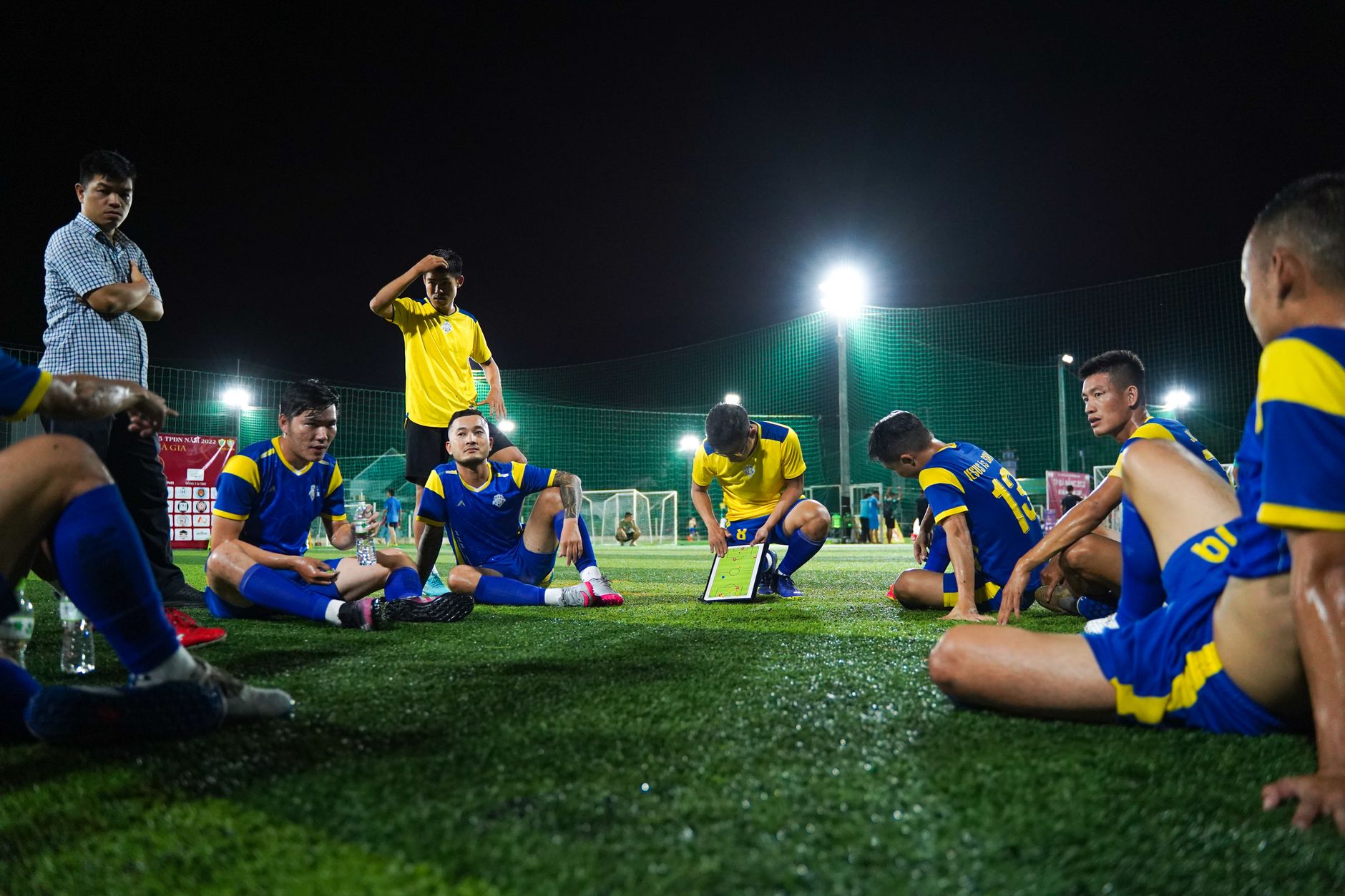
Photo by Quyn Phạm on Pexels
The lesser-known edge is that expanded formats can distort betting confidence early. In a 32-team World Cup, analysts had decades of comparable group-stage data. In 2026, models must adapt to 48 teams and 104 matches, and some market prices may overreact to confederation stereotypes. A practitioner-level tip: when evaluating an underdog, do not start with FIFA ranking alone; check whether the underdog’s domestic core plays together at club level, whether its goalkeeper faces high shot volume in qualifying, and whether it defends cutbacks well. Those details are less glamorous than star names, but they help identify teams capable of covering spreads or frustrating favorites. For more structured prep, read our [Internal Link: 2026 World Cup betting market basics].
See the details before you follow a crowd-driven prediction.
Myth 3: Is World Cup betting mostly about picking winners — flat-out false?
No, winner markets are only one part of World Cup analysis. Smarter coverage studies totals, cards, corners, player shots, group qualification, Asian handicaps, and live tactical shifts after lineups are confirmed.
The outright winner market is attractive because it feels clean: pick France, Brazil, Argentina, England, Spain, Germany, or Portugal and wait. But from a professional SEO and gambling-content perspective, that is usually the least flexible way to analyze the FIFA World Cup. Outright odds compress public emotion, patriotic money, and media narratives months before lineups are known. By contrast, match-specific markets allow you to respond to verified team sheets, weather, referee tendencies, and tactical matchups. FIFA’s official tournament information explains the global structure of the competition, while the FIFA official website remains the primary source for schedules, squads, and match updates.
Here is a practical step-by-step method for more disciplined World Cup analysis:
- Start with the official fixture date, host city, kickoff time, and likely climate conditions.
- Compare team rest days and travel distance since the previous match.
- Check whether either coach changes shape against stronger opponents.
- Review shot quality, not only goals scored, from recent competitive matches.
- Wait for lineups before taking player-prop positions.
- Track live momentum only when it reflects structure, not just crowd noise.
This is the kind of workflow Goal Moments emphasizes because it reduces dependence on emotional picks. It does not guarantee profit, and gambling always carries risk, but it gives fans a more evidence-based way to interpret 2026 World Cup markets.
What actually works?
What works is a layered process: history for context, current squad data for probability, tactical matchup analysis for match reading, and market discipline for betting decisions. No single statistic is enough for the FIFA World Cup.
The most reliable World Cup analysis begins by refusing one-factor explanations. Possession percentage can mislead if a team circulates the ball slowly without penetration. Expected goals can mislead in small samples if one penalty inflates the total. FIFA ranking can mislead when a team dominates weak qualifiers but struggles against elite pressing. Even star-player form can mislead if the national-team role differs from the club role. That is why a practical system should combine macro and micro signals, especially for the 2026 FIFA World Cup, where the United States, Canada, and Mexico introduce different climates and logistical demands.
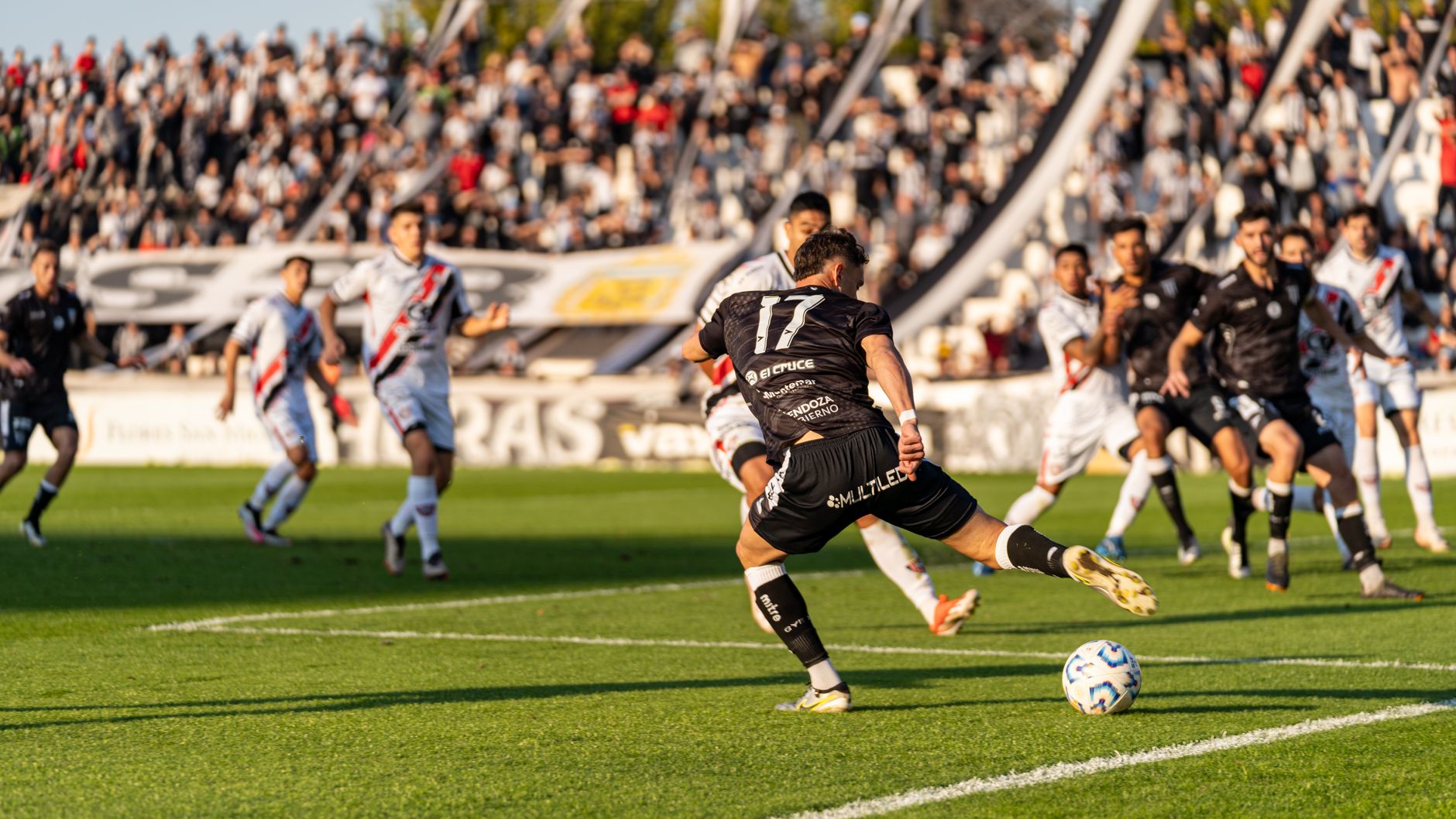
Photo by Franco Monsalvo on Pexels
Use this compact checklist before trusting any prediction:
- Historical baseline: titles, knockout experience, penalty record, and confederation strength.
- Current form: injuries, minutes played, recent competitive results, and squad age profile.
- Tactical fit: pressing resistance, defensive rest shape, set-piece routines, and transition control.
- Market timing: opening odds, public movement, lineup confirmation, and live-game triggers.
- Risk control: budget limits, no chasing losses, and no betting based purely on national loyalty.
The International Centre for Sports Studies regularly publishes football research on player performance and squad trends, which can support deeper analysis. Its work reinforces a broader point: squad construction and player workload matter. A quote from FIFA’s own governance language is also useful here: FIFA describes its mission as making football “truly global.” That ambition is visible in 2026, but global reach also means analysts must understand more teams, more travel routes, and more tactical cultures than before.
Ready to replace guesswork with a more systematic World Cup routine?
What should you ignore?
Ignore lazy narratives that treat flags, past trophies, or superstar names as automatic predictions. The FIFA World Cup is decided by current match conditions, tactical execution, squad health, and pressure management.
The first thing to ignore is the phrase “they always perform at tournaments.” Sometimes it is true, but often it is just a way to avoid analysis. Italy won the 2006 FIFA World Cup and then failed to qualify for both 2018 and 2022. Germany won in 2014 and then exited in the group stage in 2018 and 2022. Spain won in 2010 but has had mixed knockout returns since. These examples do not make history useless; they prove that history needs updating. If a team’s midfield cannot handle pressure, if its full-backs leave space behind, or if its striker profile does not match the service pattern, reputation will not save it.
The second thing to ignore is overconfident precision. Anyone claiming to know the 2026 FIFA World Cup winner before the final draw, injuries, and squad announcements is selling certainty that football does not provide. A better position is refined skepticism: rank teams by probability bands, update after each match, and separate entertainment picks from serious analysis. Goal Moments fits that approach by covering match predictions, team tactics, player stats, and tournament coverage in a format built for daily learning. For related reading, explore our [Internal Link: player stats and injury tracking hub] and [Internal Link: live match prediction framework].

Photo by Murat Ak on Pexels
One final note before the FAQ: skepticism should not remove joy from the tournament. It should protect fans from shallow claims. The FIFA World Cup remains compelling precisely because it combines elite structure with irrational moments: a deflection, a penalty shootout, a teenage breakout, or a veteran’s final run. The refined position is not “ignore history” or “trust data blindly.” It is this: use history as the map, current evidence as the compass, and disciplined judgment as the route.
Continue your 2026 World Cup preparation with daily analysis from Goal Moments.
Frequently Asked Questions
Q: What is the FIFA World Cup?
A: The FIFA World Cup is the leading men’s international football tournament organized by FIFA. It began in 1930 in Uruguay and is usually held every four years. The competition brings national teams through qualification and into a final tournament, with the 2026 edition expanding to 48 teams across the United States, Canada, and Mexico.
Q: How does the 2026 FIFA World Cup format change analysis?
A: The 2026 FIFA World Cup changes analysis by expanding to 48 teams and 104 matches. That means more fixtures, broader underdog participation, and more travel variables across North America. Analysts should adjust by studying rotation depth, group-stage volatility, host-city conditions, and matchup-specific tactics rather than relying only on old 32-team tournament patterns.
Q: What is the difference between World Cup predictions and betting tips?
A: World Cup predictions estimate likely football outcomes, while betting tips connect those outcomes to market prices and risk. A prediction might say France have a tactical edge, but a betting tip must judge whether the odds are still valuable. Responsible analysis should include lineup checks, bankroll limits, and clear recognition that no bet is guaranteed.
Q: Why do World Cup favorites sometimes fail?
A: World Cup favorites fail because reputation cannot overcome poor form, injuries, tactical mismatches, or knockout randomness. Germany’s group-stage exits in 2018 and 2022 showed that historic strength does not automatically translate into current performance. Favorites should be evaluated by present squad balance, pressing resistance, defensive transitions, and set-piece quality.
Q: How much does it cost to follow FIFA World Cup analysis on Goal Moments?
A: Goal Moments content availability depends on the site’s current access model and published offers. Fans can follow coverage focused on 2026 World Cup predictions, tactics, player stats, and tournament updates. Before relying on any service for gambling-related decisions, check the latest terms, understand the risks, and use analysis as guidance rather than certainty.
Q: What should I do if my World Cup betting strategy is not working?
A: Stop increasing stakes and review whether your assumptions are too narrative-driven. Check if you are betting before lineups, ignoring travel and rest days, or overvaluing famous teams. A better reset is to reduce bet size, track every pick, focus on fewer markets, and use structured analysis before placing another wager.
End of transmission.
Goal Moments • Neon Protocol • System Active