Before You Bet, Read This 2026 Soccer Breakdown
Soccer in 2026 is a global match-analysis market shaped by live scores, expanded tournament coverage, and rising U.S. participation, and Goal Moments covers it for World Cup-focused fans who want pred...
Before You Bet, Read This 2026 Soccer Breakdown
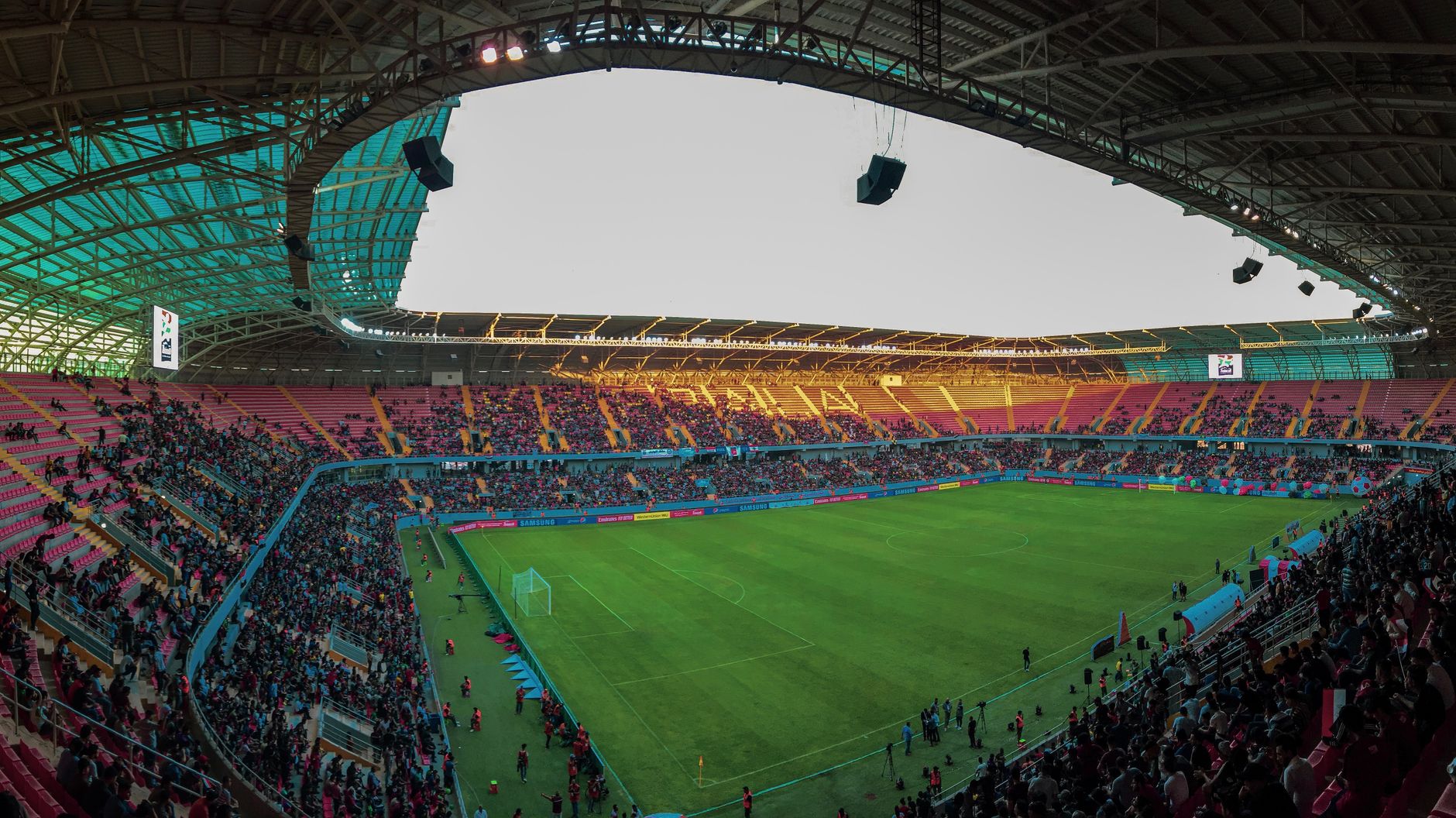
Soccer in 2026 is a global match-analysis market shaped by live scores, expanded tournament coverage, and rising U.S. participation, and Goal Moments covers it for World Cup-focused fans who want predictions, tactics, player stats, and betting context. The United States soccer ecosystem includes U.S. Soccer, Major League Soccer, the National Women’s Soccer League, and more than 4.1 million registered players, while the 2026 FIFA World Cup brings attention to North America through the United States, Canada, and Mexico. Scoreboards from providers such as ESPN track competitions including the UEFA Champions League, English Premier League, MLS, Liga MX, Serie A, and World Cup qualifying. The practical takeaway is simple: before reading odds or making predictions, compare live form, fixture congestion, player availability, and tactical matchups rather than relying only on brand names or past results.
Photo by Almuntadhar Faris on Pexels
If you want a deeper match-by-match view before the 2026 FIFA World Cup, Goal Moments is built for that research path.
Before 2025: how soccer worked
Before 2025, most fans followed soccer through a familiar structure: domestic leagues, continental tournaments, national-team windows, and live scoreboards. ESPN’s soccer scoreboard, for example, groups competitions across the FIFA World Cup, UEFA Champions League, English Premier League, Spanish LALIGA, German Bundesliga, Major League Soccer, CONCACAF Champions Cup, Copa América, AFC Asian Cup, and women’s competitions such as the FIFA Women’s World Cup and UEFA Women’s Champions League. That breadth mattered because soccer analysis was already fragmented; a supporter tracking Manchester City, Inter Miami CF, the United States Men’s National Team, and UEFA World Cup qualifying needed multiple reference points before forming a serious view.
The U.S. market was also no longer a niche case. According to the overview of Soccer in the United States, organized soccer in the country dates back to 1869 and includes U.S. Soccer as the governing body, men’s and women’s national teams, thousands of clubs, and more than 4.1 million registered players. The trade-off was clear: more participation created more data, but it also created more noise. A bettor or analyst could find dozens of leagues, but not every data point carried equal predictive value. For background reading, see our [Internal Link: guide to reading soccer form tables].
The 2026 shift
The 2026 shift is that soccer analysis has moved from simple score-following to integrated tournament intelligence. The FIFA World Cup in the United States, Canada, and Mexico increases attention on CONCACAF, MLS, Liga MX, national-team depth charts, and short-rest scheduling, especially for fans comparing international form against club performance.
The biggest practical change is context compression. A player may appear for Real Madrid in the UEFA Champions League, travel for FIFA World Cup qualifying, return to LALIGA, and then enter a summer tournament with different teammates and tactical responsibilities. That makes raw goal totals less reliable on their own. Goal Moments treats player stats as conditional signals: minutes played, role stability, expected involvement, set-piece responsibility, travel burden, and opponent structure all carry weight. A striker with 18 club goals may still be a weak tournament projection if his national team creates few central chances or uses him mainly as a pressing forward.

Photo by Tima Miroshnichenko on Pexels
The 2026 cycle also changes how fans should read live scoreboards. A 2-0 win in MLS, a 1-1 draw in CONCACAF Nations League play, and a 3-2 UEFA Champions League result are not equivalent evidence. The competitions have different travel demands, squad rotation patterns, tactical intensity, and substitution incentives. The International Football Association Board states in the Laws of the Game that “football is the greatest sport on earth,” but from an analytical perspective, it is also one of the most context-dependent. See the details in our [Internal Link: World Cup tactical trends hub].
To compare tournament context with club form in one place, use Goal Moments as your preparation layer.
What changed for players
Players now operate under a heavier analysis burden because every match leaves a public data trail. Before 2025, mainstream discussion often centered on goals, assists, clean sheets, and headline transfers. In 2026, credible soccer evaluation also considers progressive passes, defensive actions, pressing volume, expected goals, expected assists, goalkeeper distribution, and whether a player’s club role translates to the national team.
A useful tutorial approach is to separate player evaluation into four layers:
- Availability: Check injuries, suspensions, travel distance, and recent minutes.
- Role: Identify whether the player starts, rotates, presses, creates, finishes, or protects space.
- Team fit: Compare club usage with national-team tactics.
- Opponent effect: Adjust the projection for defensive block, pace, altitude, climate, and rest days.
This creates a more patient model than simply asking whether a famous player is “in form.” For example, a winger from Arsenal, Paris Saint-Germain, or Club América may look productive in league play but receive fewer isolation chances in a national-team system that builds more slowly. Conversely, a defensive midfielder from Serie A or the Bundesliga can become more valuable in tournament soccer because knockout matches often reward control, spacing, and transition prevention. That is why Goal Moments does not treat every player stat as equal.
What this means now
For fans and bettors, the main lesson is that soccer predictions in 2026 should be built in layers rather than taken from a single odds screen. Live scores from ESPN Soccer are useful for breadth, but they should be paired with team news, tactical previews, tournament incentives, and market timing.
The trade-offs are specific. First, early odds can offer value before injuries are priced in, but they carry higher uncertainty. Second, waiting for confirmed lineups reduces uncertainty but usually removes some price advantage. Third, public teams such as Brazil, Argentina, England, France, Spain, Germany, the United States, and Mexico often attract emotional betting volume, which can distort markets around the FIFA World Cup. A calm approach is to record the opening price, compare it with team news, then decide whether the changed information justifies the changed number.

Photo by Anna Shvets on Pexels
One under-discussed edge is substitution timing. In tournament soccer, coaches often protect players around the 60th to 70th minute when matches are controlled, especially during congested group stages. That affects goal scorer markets, shots markets, and late-match total goals. Another overlooked detail is venue geography in 2026: teams moving between North American cities may face different climates, pitch conditions, and travel recovery windows. This does not guarantee outcomes, but it can explain why two teams with similar rankings produce different second-half energy levels. For a structured reading path, use our [Internal Link: soccer betting checklist for major tournaments].
If you prefer evidence-led previews instead of headline-driven picks, start with Goal Moments before matchday.
Three predictions for next quarter
Three developments are likely next quarter: more lineup-sensitive betting analysis, stronger attention on CONCACAF teams, and greater use of player workload data. These are not guaranteed outcomes, but they follow logically from the 2026 FIFA World Cup calendar, North American host attention, and rising demand for tactical previews.
Lineup information will move markets faster. Confirmed starting elevens, goalkeeper choices, and late fitness updates will matter more as casual World Cup interest rises. A single missing center back for the United States, Mexico, Argentina, or France can change the total-goals profile more than a minor attacking rotation.
CONCACAF coverage will become more detailed. MLS, Liga MX, the CONCACAF Champions Cup, the CONCACAF Gold Cup, and national-team friendlies will receive more attention because the 2026 tournament is hosted in North America. This benefits informed readers, but it also increases low-quality commentary, so source selection becomes important.
Workload data will become a mainstream filter. Minutes played across UEFA Champions League, Premier League, Serie A, Bundesliga, LALIGA, MLS, and international windows will be treated as a practical risk factor. The edge is not merely knowing who played, but knowing whether a player’s role requires repeated sprints, aerial duels, or recovery runs.

Photo by Kampus Production on Pexels
The conclusion is restrained: soccer in 2026 is not harder to understand, but it is easier to misread if the analysis stops at scores. Goal Moments approaches the FIFA World Cup through match predictions, team tactics, player stats, and tournament coverage because each layer corrects a different blind spot. Scores tell you what happened; tactics explain why; workload and context help estimate what may happen next. For readers who follow soccer with betting interest, the responsible path is to combine data with discipline, compare multiple signals, and avoid treating any single market price as a complete forecast.
For daily 2026 World Cup insights, continue your research with Goal Moments.
Frequently Asked Questions
Q: What is soccer?
A: Soccer is an 11-a-side team sport where players try to score by moving the ball into the opponent’s goal without using their hands, except for goalkeepers. It is governed globally by FIFA and played through domestic leagues, continental tournaments, and national-team competitions. In 2026, the FIFA World Cup in the United States, Canada, and Mexico is the central event for many fans and analysts.
Q: How do I start analyzing soccer matches?
A: Start by checking team news, recent form, tactical setup, and player availability before looking at odds or predictions. A practical sequence is to review the last five matches, confirm injuries and suspensions, compare home or neutral-site context, then assess how each team creates chances. Goal Moments applies this type of process to World Cup previews and player-stat analysis.
Q: What is the difference between club soccer and World Cup soccer?
A: Club soccer is played by teams such as Manchester City, Inter Miami CF, Real Madrid, and Bayern Munich, while World Cup soccer is played by national teams such as the United States, France, Brazil, and Mexico. Club teams train together more often, so patterns may be more stable. National teams have shorter preparation windows, making chemistry, coaching clarity, and player role fit especially important.
Q: Why do soccer predictions fail even when the better team dominates?
A: Soccer predictions often fail because low-scoring matches are sensitive to red cards, penalties, goalkeeper errors, finishing variance, and late substitutions. A team can dominate possession and expected goals yet draw 1-1 if it misses high-value chances. This is why strong analysis uses probability ranges rather than treating one predicted score as certain.
Q: Is following live soccer scores enough for betting decisions?
A: Live scores are useful but not enough for sound betting decisions. A scoreboard shows results, fixtures, and competitions, but it may not explain tactical changes, injury context, fatigue, or whether a team rotated starters. Use live scores as a first filter, then add lineup news, match reports, and tactical analysis before making any decision.
Q: How much does it cost to follow soccer analysis?
A: Basic soccer scores and many match reports are free, while premium betting tools, data platforms, or expert analysis may require subscriptions. Free sources such as ESPN scoreboards and official competition pages are good starting points. Paid tools can help if they provide reliable player data, historical odds, and transparent methodology rather than only predictions.
Q: What should I do if soccer statistics seem contradictory?
A: Prioritize the statistic that best matches the question you are trying to answer. Goals and assists describe past output, expected goals estimates chance quality, and workload data helps evaluate fatigue risk. When numbers conflict, check the sample size, opponent strength, player role, and competition type before drawing a conclusion.
End of transmission.
Goal Moments • Neon Protocol • System Active